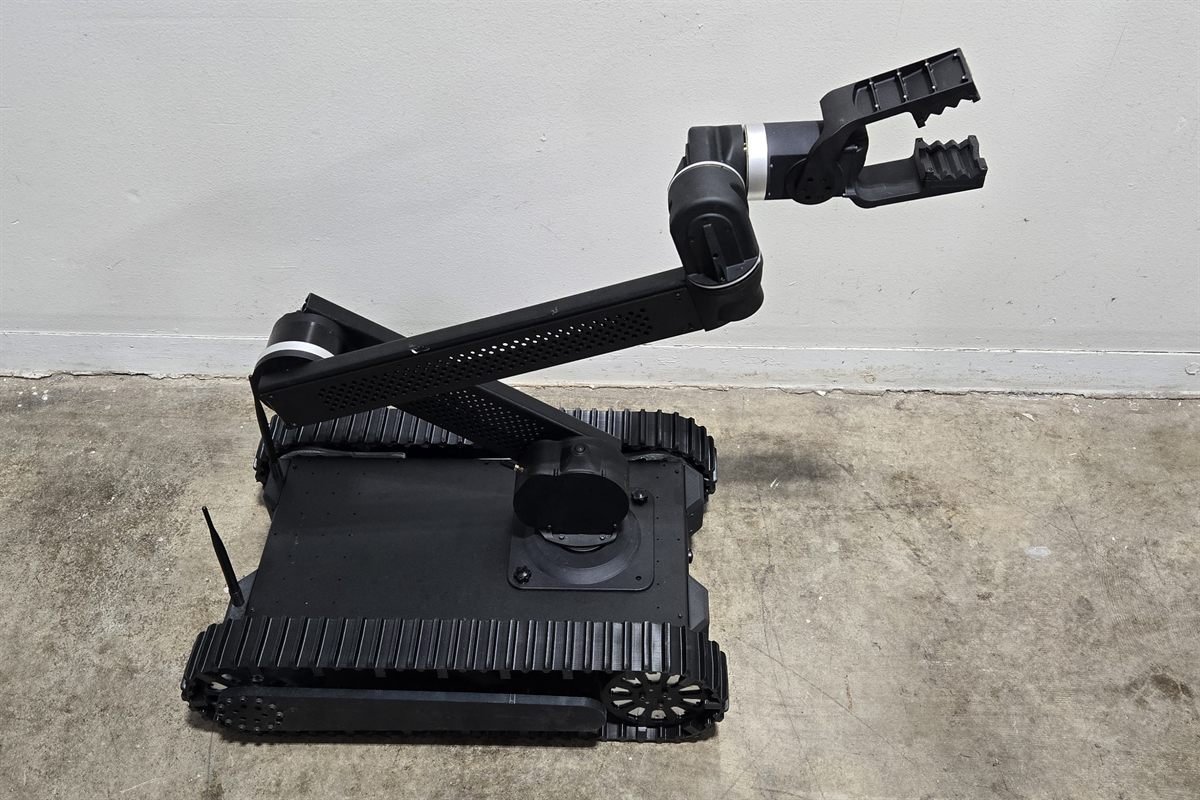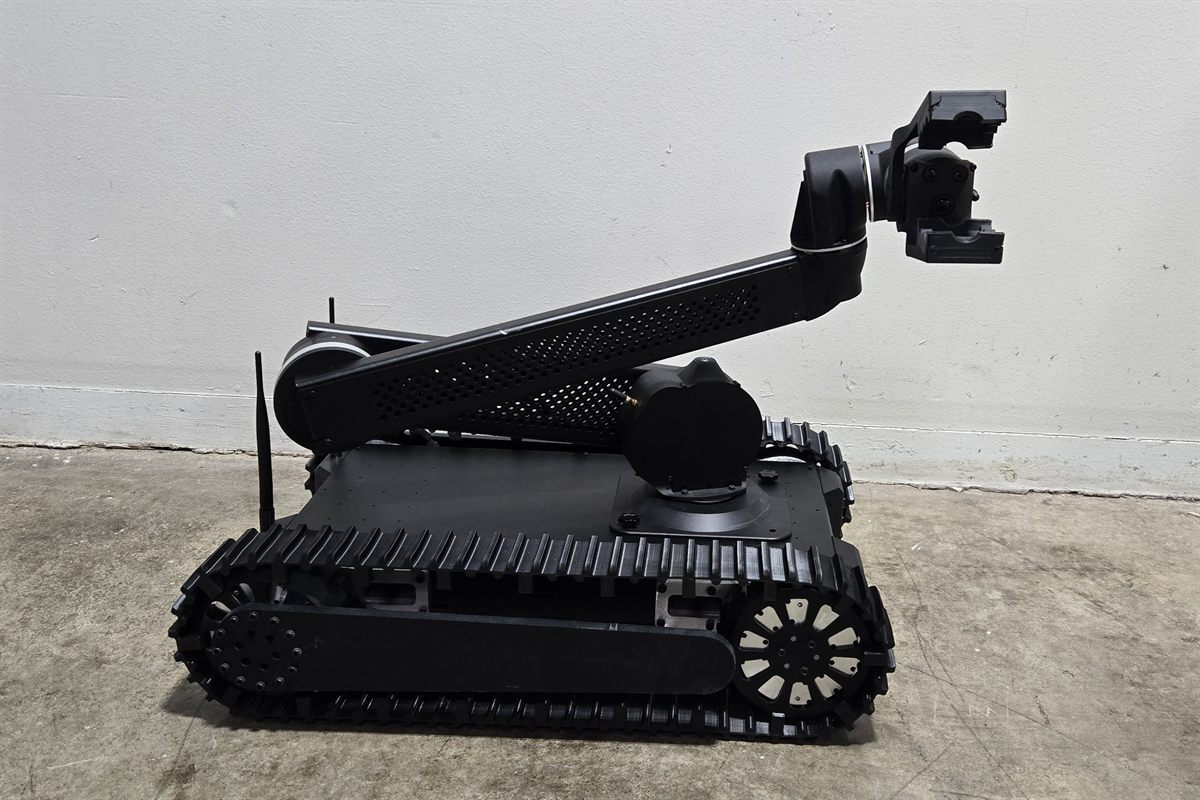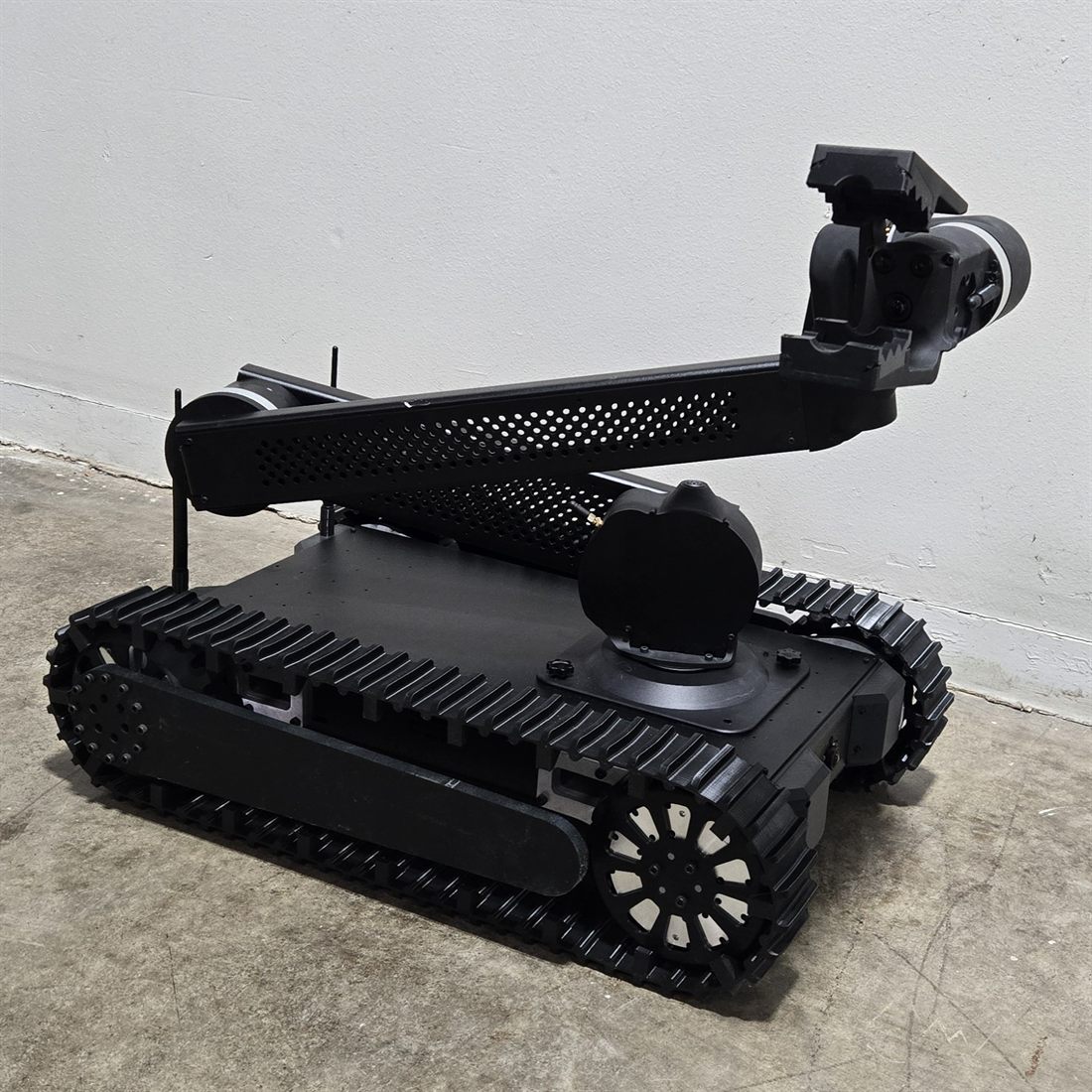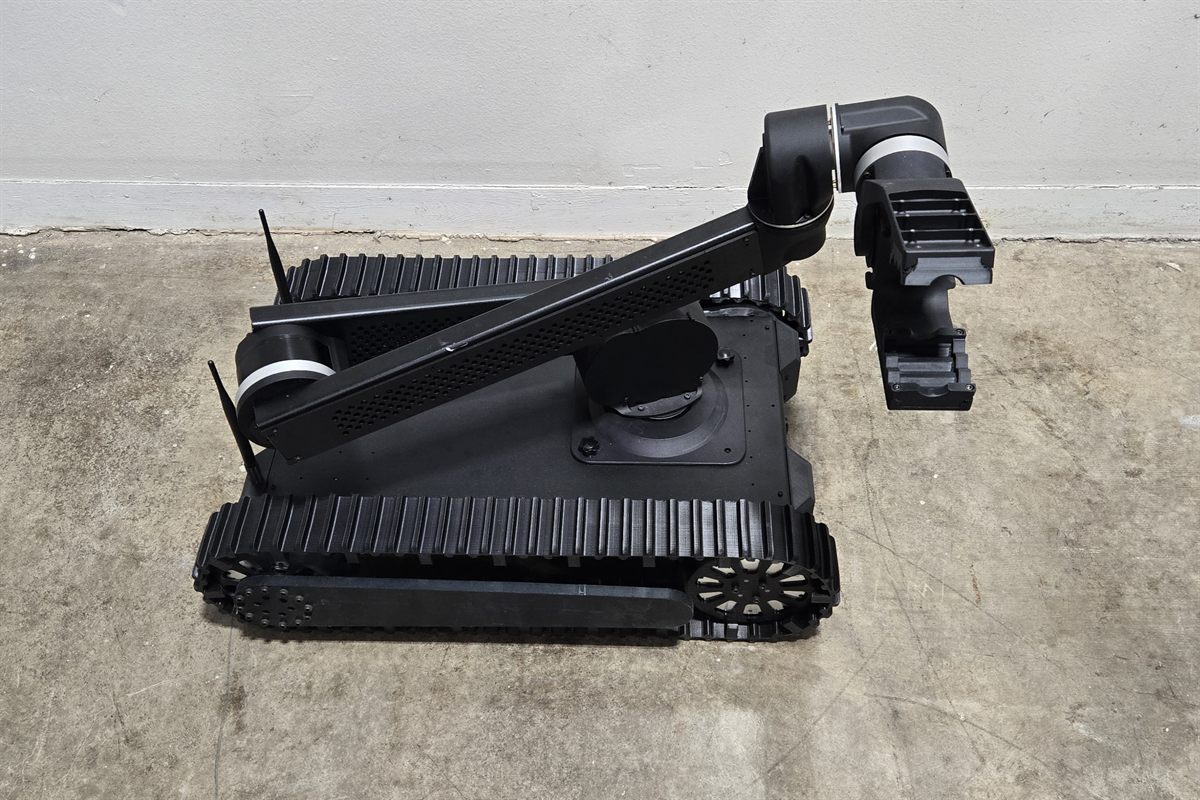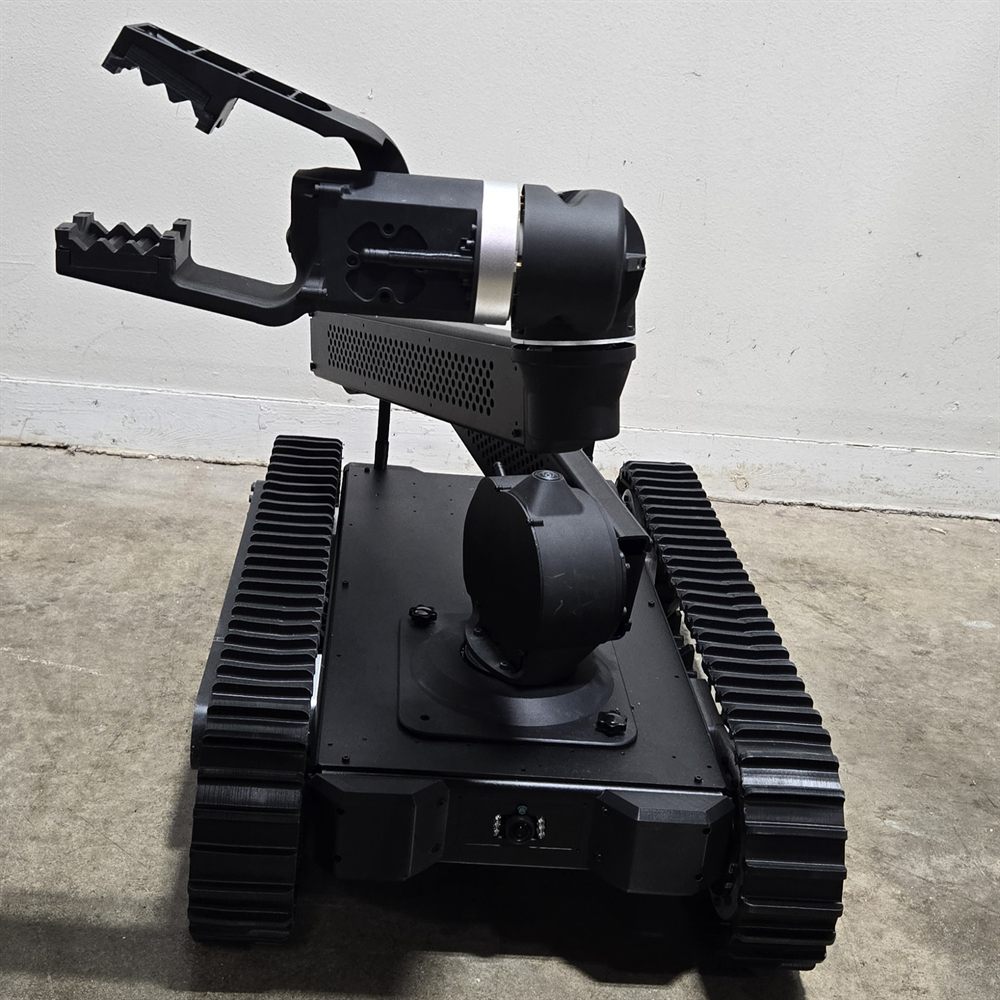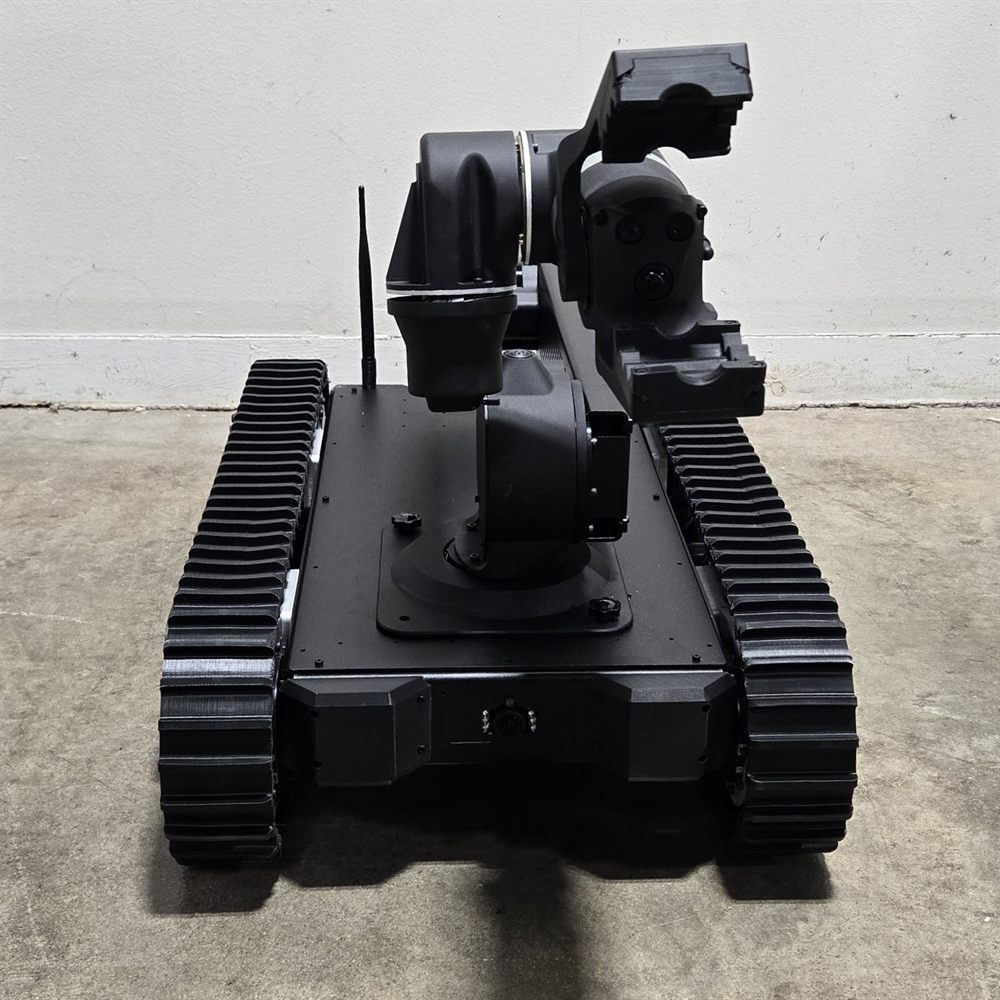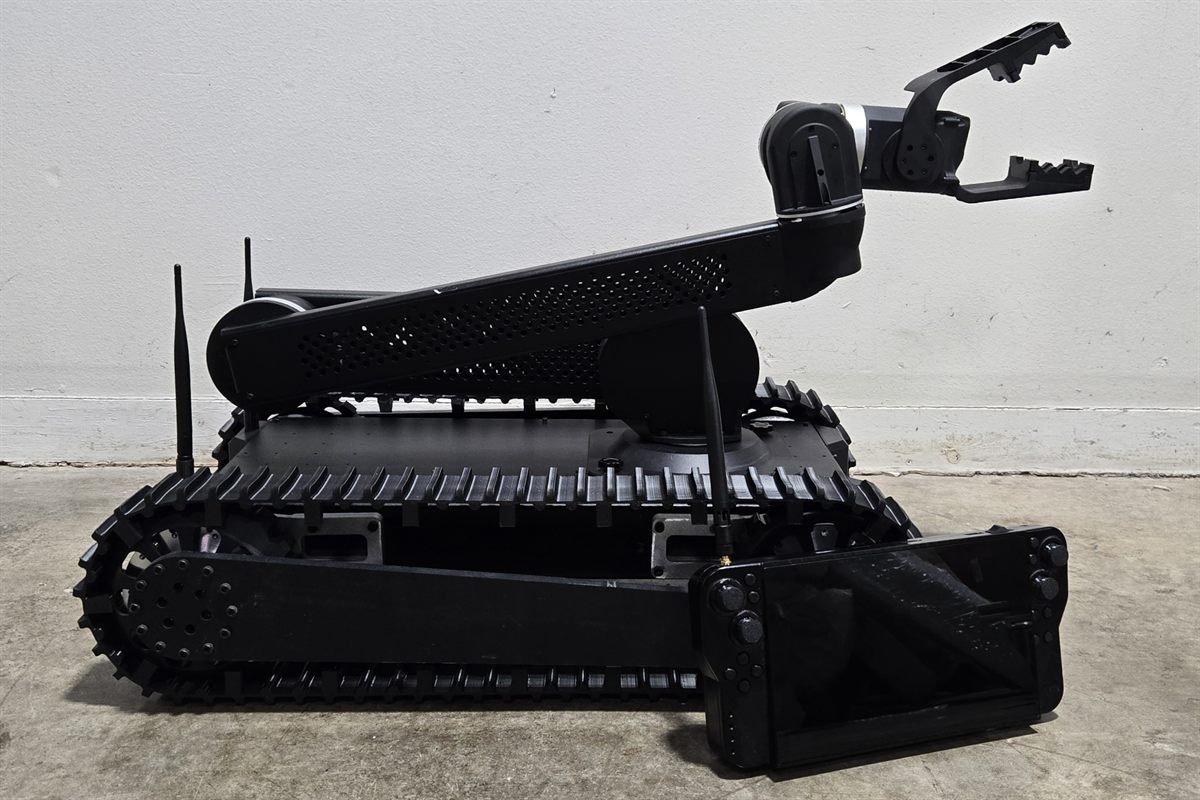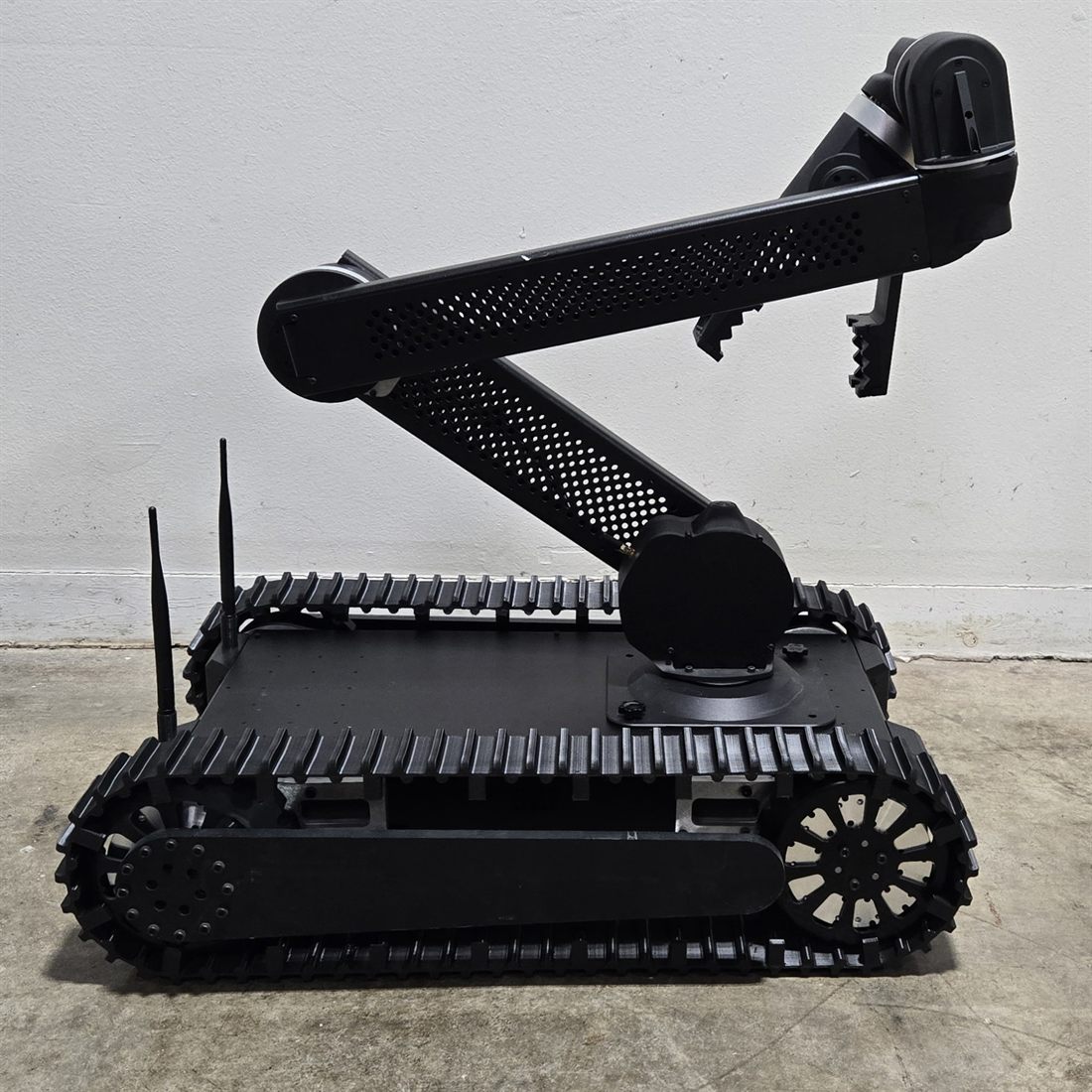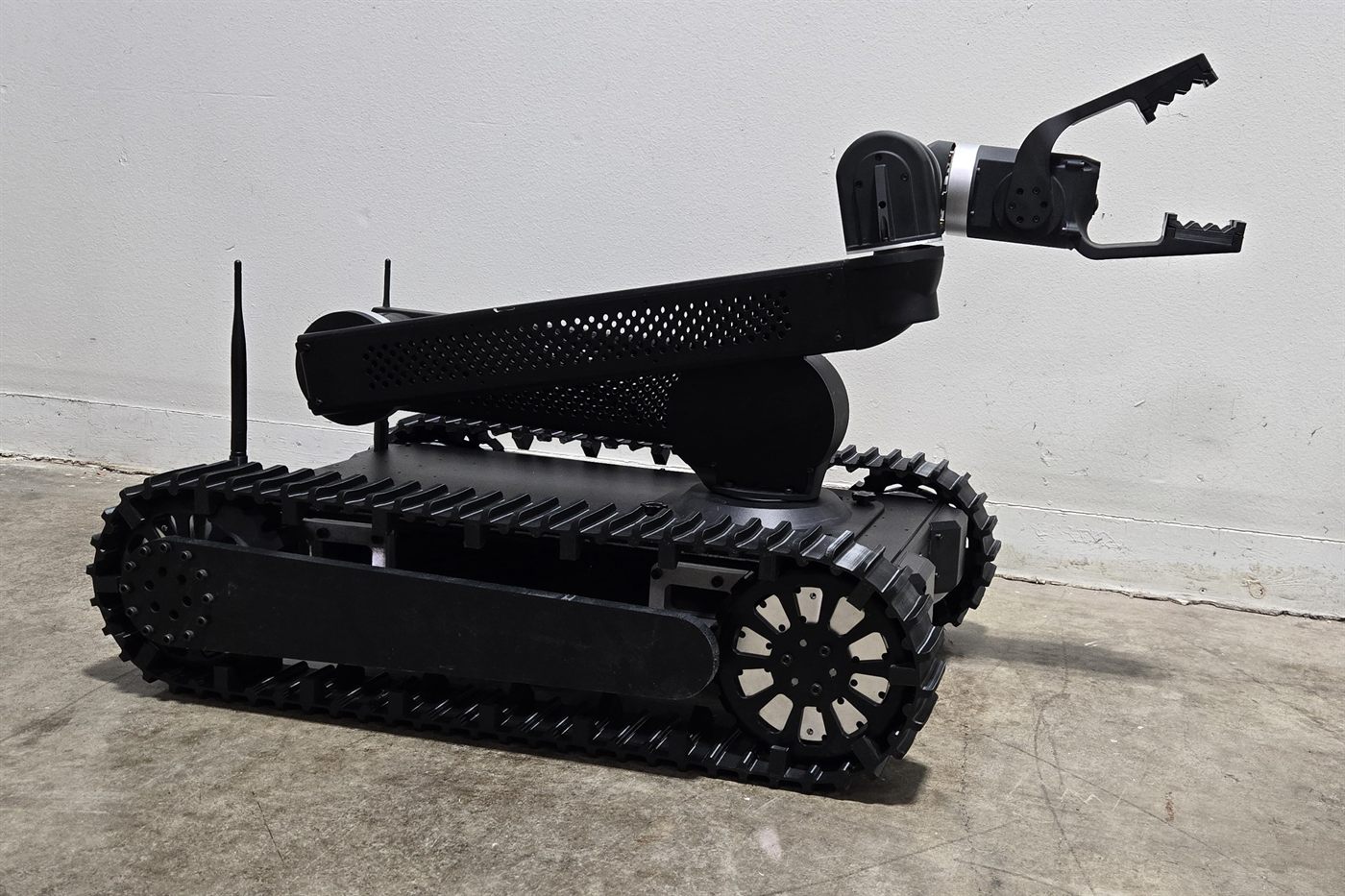
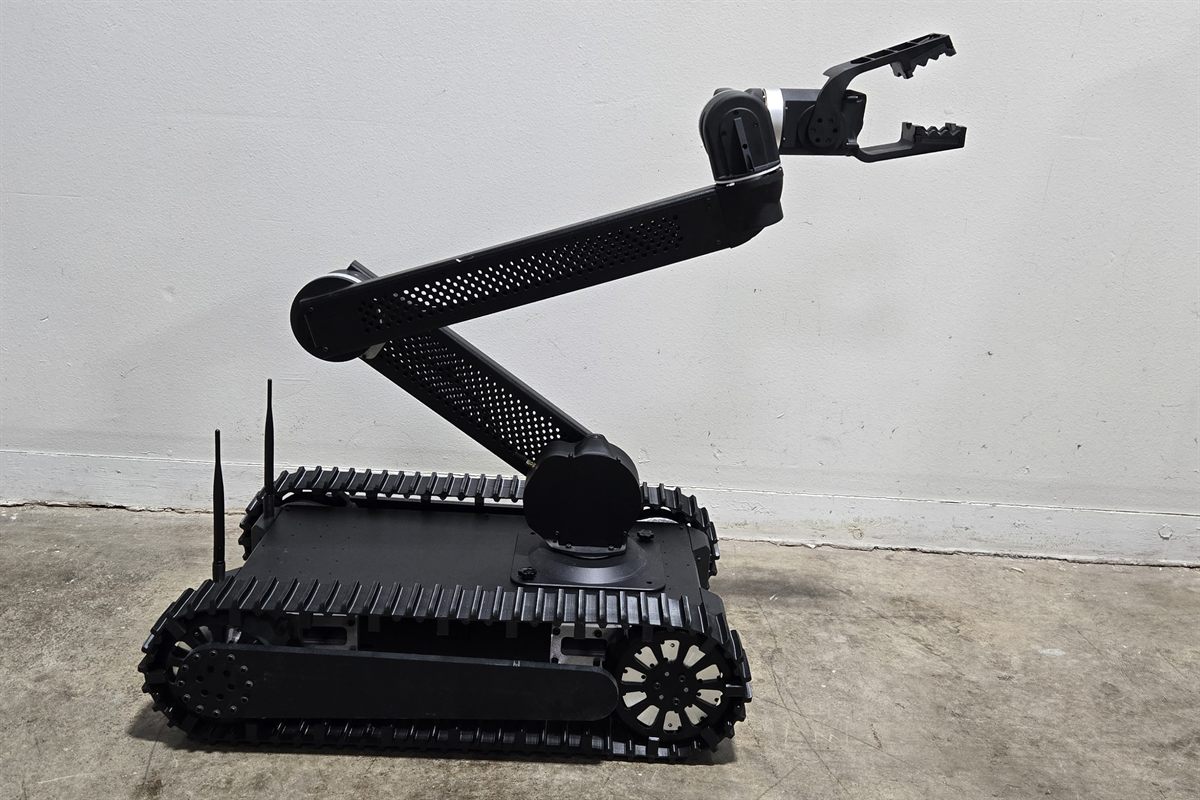
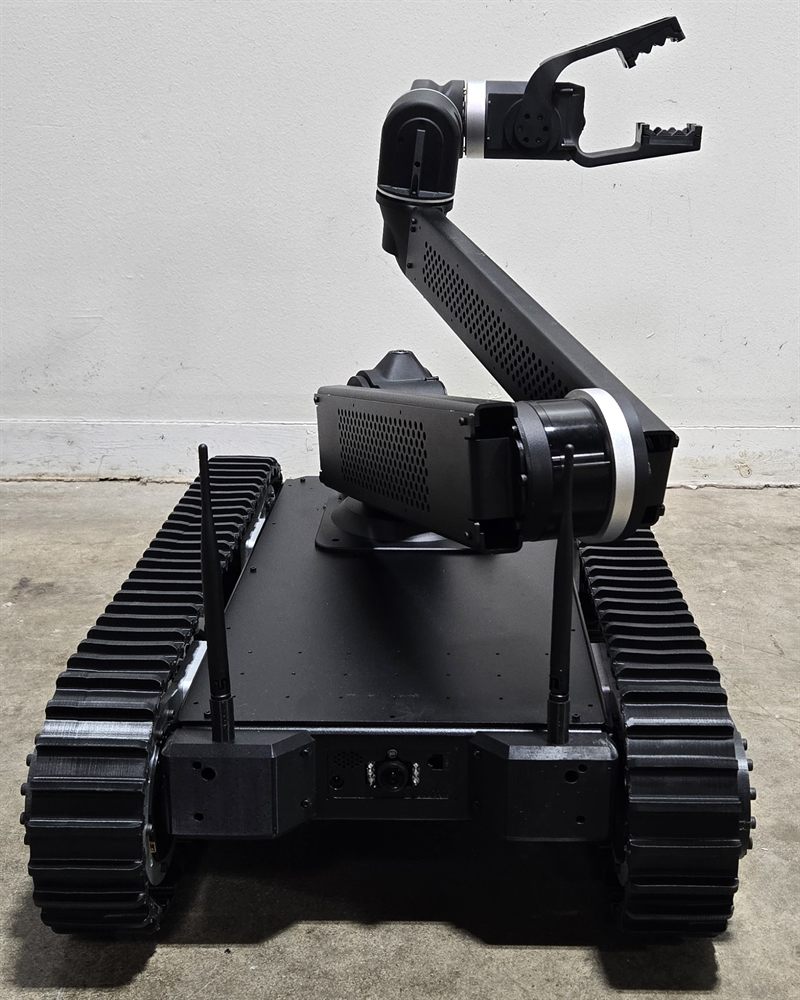
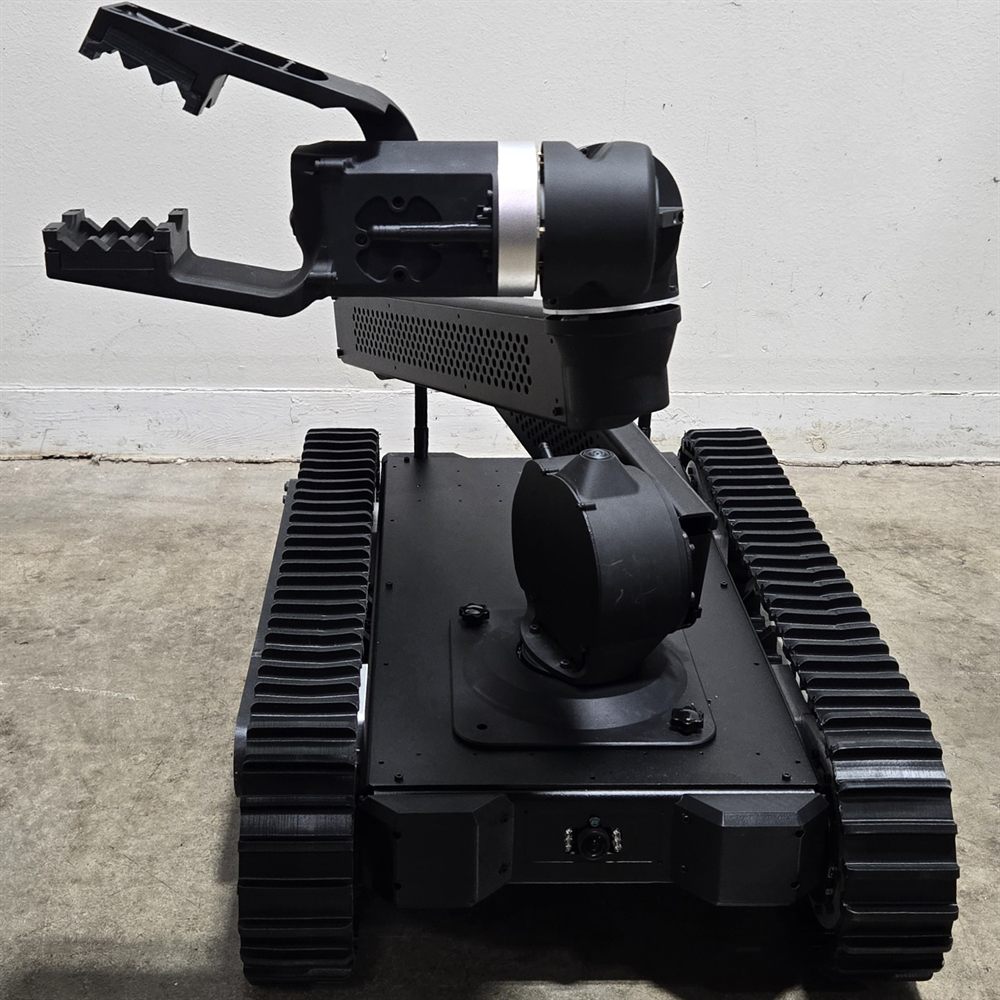
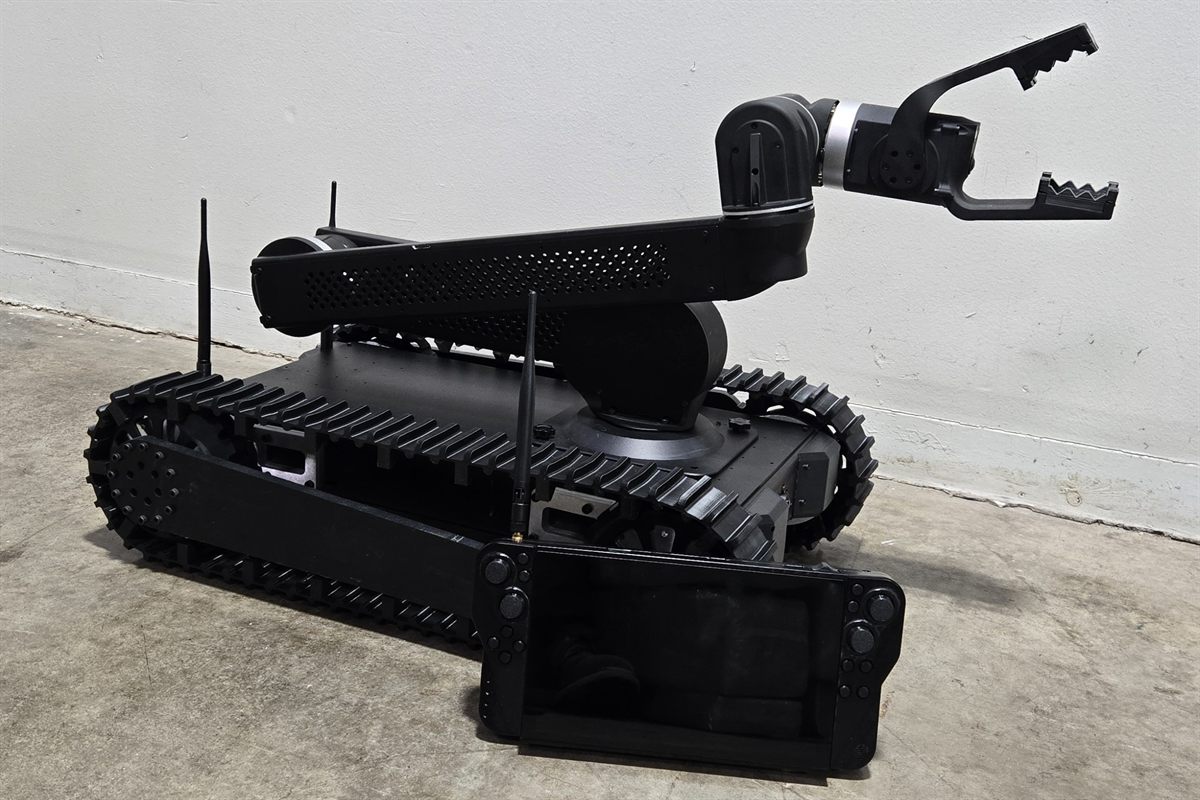
Bulldog Tactical Support Robot
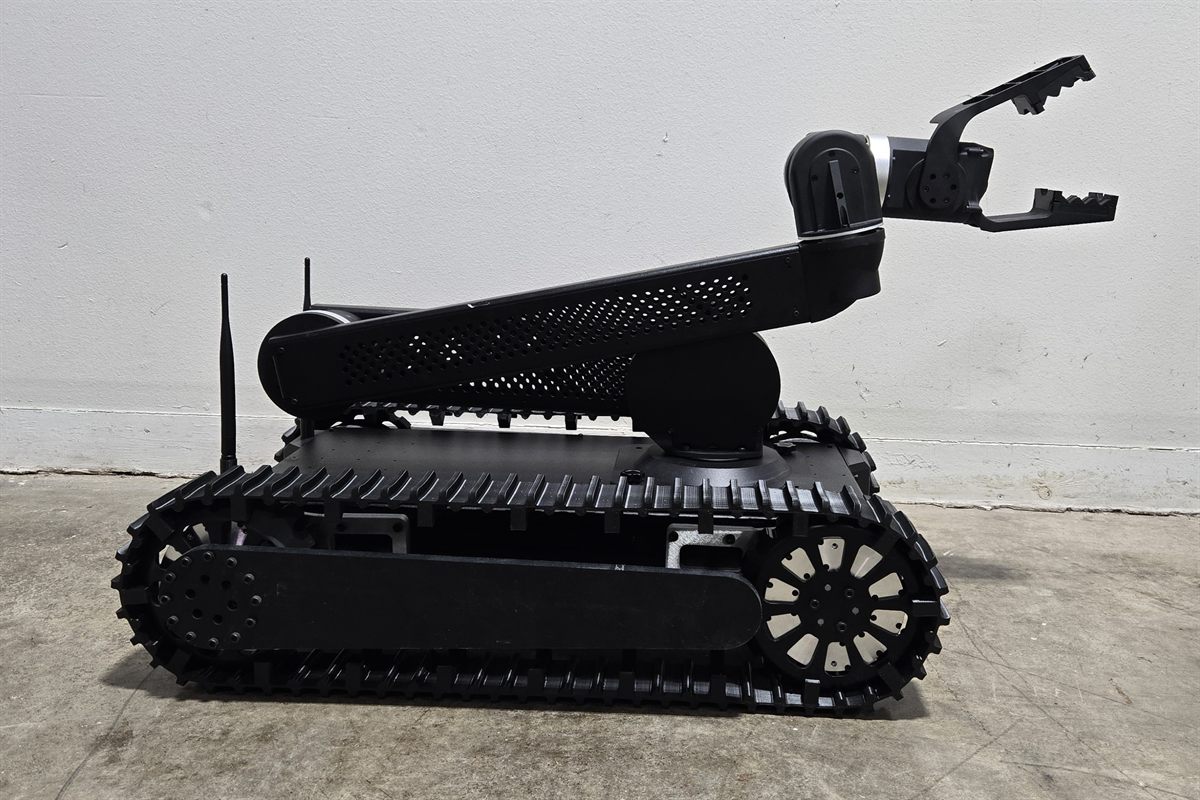
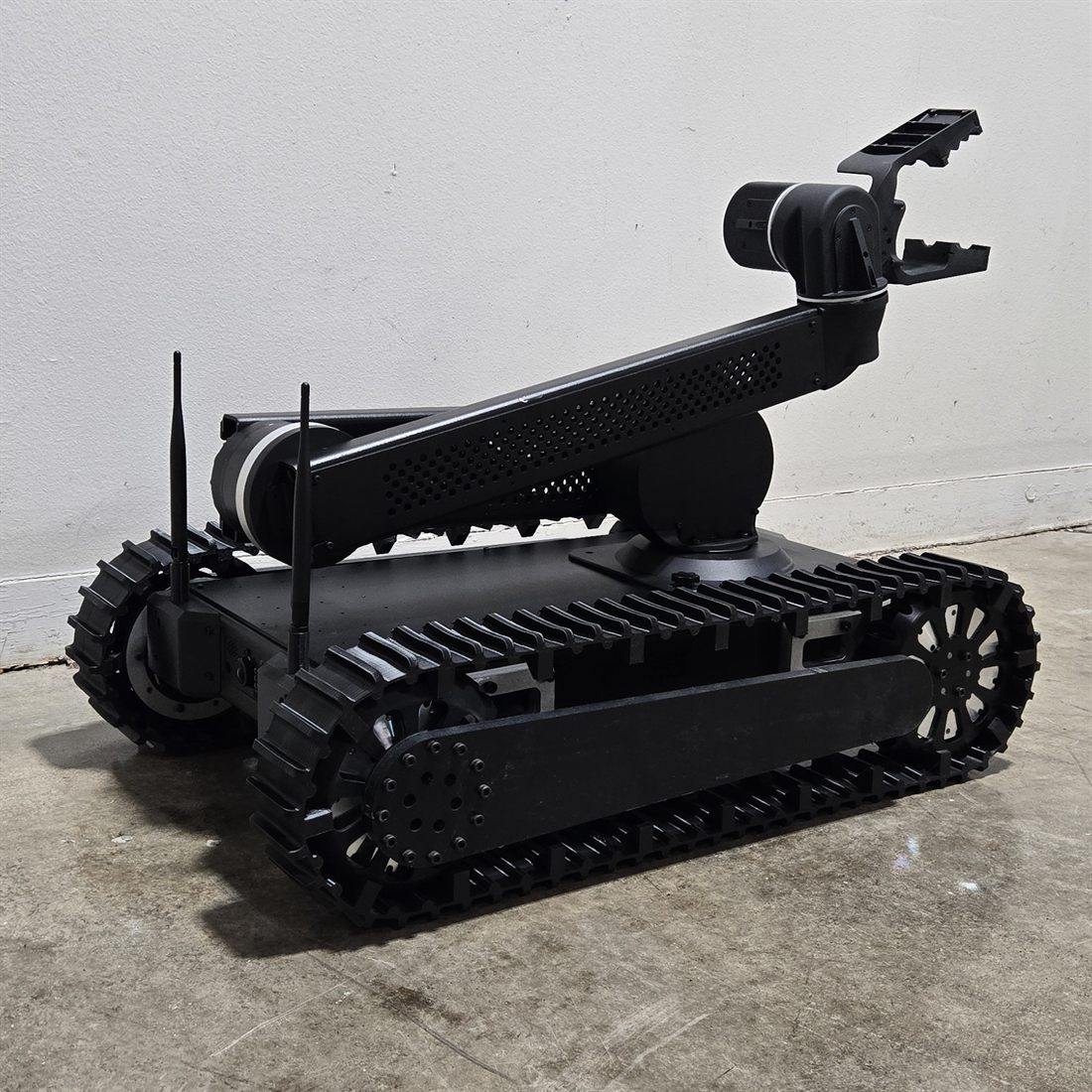
The Bulldog is a tracked tactical support robot built for the jobs where distance matters. It gives teams a way to look, listen, move objects, open doors, and check hazardous areas without sending a person in first.
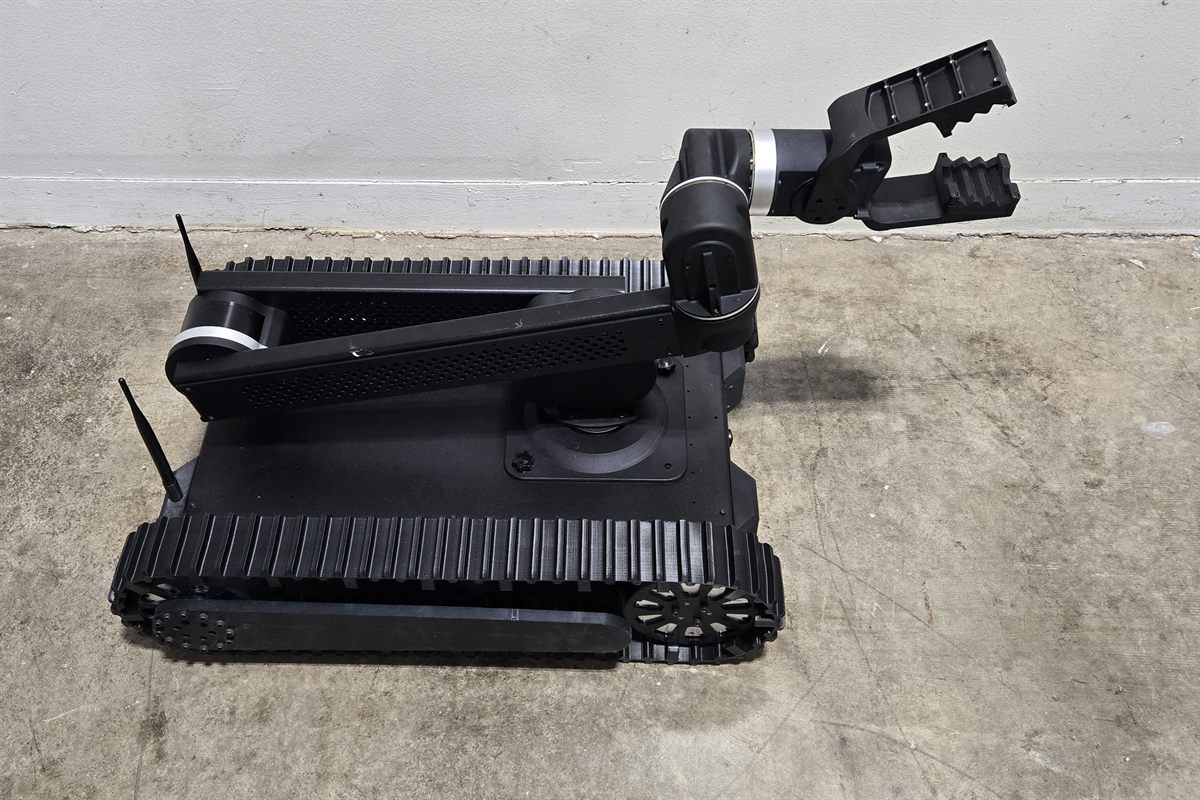
It keeps the balance that made the Bulldog one of our best-known tactical robots: enough size and weight to do useful work, enough traction to handle stairs and mixed surfaces, and a removable arm that can be installed or taken off as the mission calls for it.
Key Features
Robot
| Length | 28 inches |
| Width | 18.5 inches |
| Ground Clearance | 2.75 inches |
| Weight | ~60 pounds |
| Speed | 3+ MPH |
| Runtime | Up to 8 hours depending on package |
| Chassis | Weather-resistant tracked chassis with aluminum construction |
| Origin | Made in the U.S. |
A Real Arm, Not Just a Camera Platform
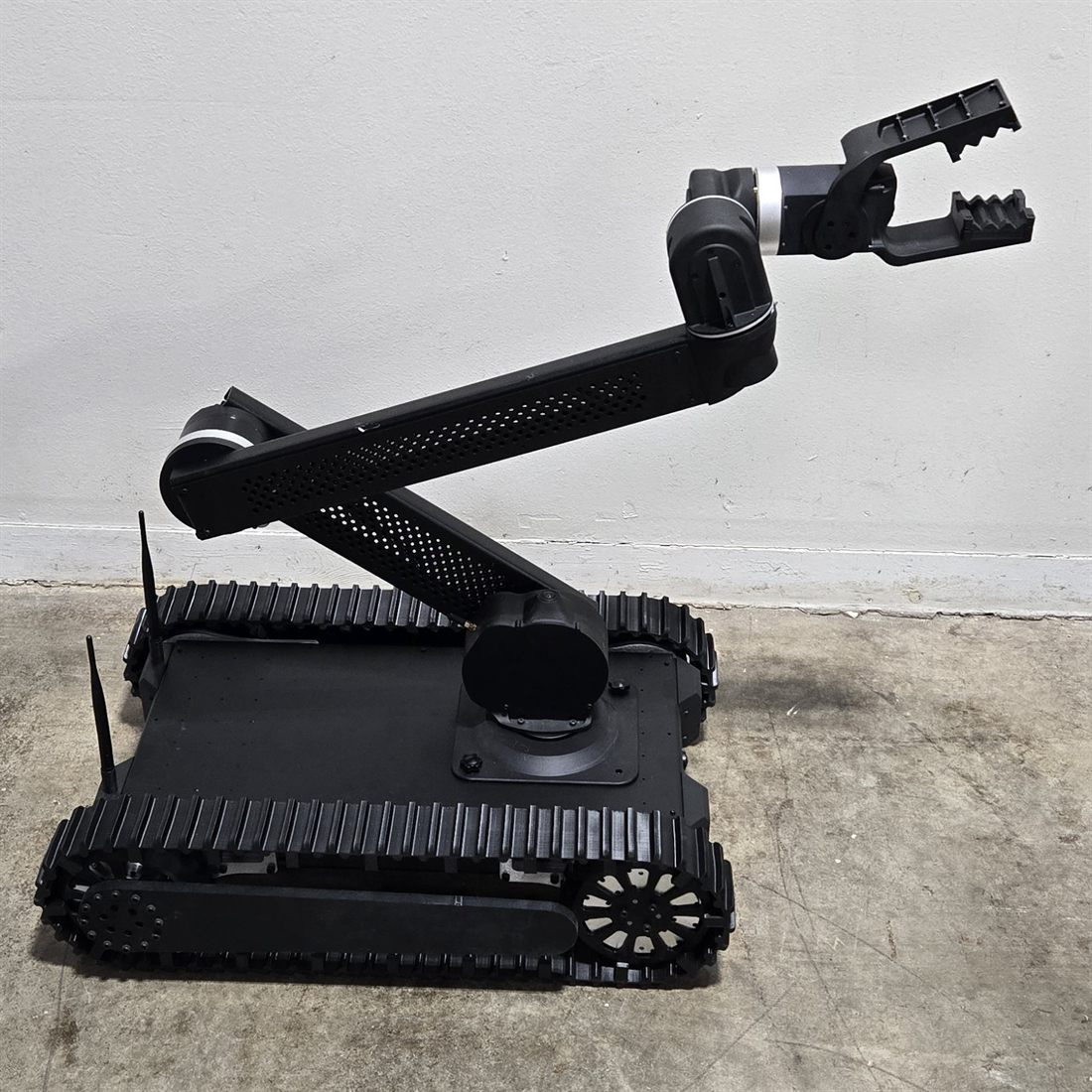
The removable 6-axis arm is what turns the Bulldog from a mobile camera into a useful tool. It can reach, inspect, push, pull, grab, carry, and help open doors while the operator stays behind cover or outside the hazard area.
When low clearance matters, the arm can be removed. With the arm installed, the Bulldog can work handles and knobs, look over furniture, move suspicious items, and get a camera or gripper into places a fixed camera cannot reach.
6-Axis Arm and Gator Grip
| Vertical Reach | 60 inches from the ground |
| Horizontal Reach | 49 inches from the base of the arm |
| Door Work | Opens flat, round, and bar-style door handles and knobs |
| Payload | Lift and carry up to 10 pounds with the arm extended |
| Grip Force | Up to 10 pounds of force between the jaws |
| Gripper | Gator Grip with easy-replace grip inserts |
| Controls | Streamlined arm controls with preset stow position |
Arm Control Modes
The Bulldog arm can be controlled in three ways. Different jobs call for different precision: command the gripper, hold it while driving, or move each joint directly.
Bulldog Lite includes Joint mode only. Standard Bulldog and Bulldog Pro add Gripper control and Hold, plus primary clash avoidance to help avoid obvious arm, gripper, and body conflicts.
Control Modes
| Gripper control | Move the gripper where you need it while the arm joints follow (Bulldog and Pro) |
| Hold | Keep the gripper fixed while driving the chassis (Bulldog and Pro) |
| Joint | Direct control of each arm axis (all packages) |
| Clash avoidance | Helps avoid obvious arm, gripper, and body conflicts (Bulldog and Pro) |
Camera Coverage for the Work in Front of You
Good camera coverage changes how a robot is used. The Bulldog can be configured with drive cameras, arm cameras, gripper views, and a rotating pan-tilt-zoom camera so the operator is not guessing what the robot is about to hit, grab, or drive over.
Cameras and Recording
| Drive Cameras | Front, rear, and downward views |
| Arm Cameras | 360° view of the arm and gripper area |
| Gripper View | Close view inside the gripper that rotates with the gripper |
| PTZ View | 10x+ zoom with 360° rotate, pan, and tilt capability |
| Night Work | IR lighting for day and night vision on front and rear views |
Tracks, Stairs, and Tight Turns
The Bulldog is designed to move through practical indoor and outdoor environments: typical residential and commercial flooring, fabric, stairs, thresholds, mixed surfaces, and other places where wheels are a poor fit.
The tracked chassis can ascend and descend stairs without flipper arms or a special stair mode. It also keeps a tight turning radius, which matters when the robot is inside a hallway, room, or confined approach path.
Drive and Power
| Tracks | Goat Traction tracks with easy-replace design |
| Stairs | Ascends and descends stairs without flipper arms or stair mode |
| Turning | Tight turning radius for indoor maneuvering |
| Robot Batteries | High-power Lithium-Ion batteries |
| Charging | Easy charge from a standard 120V outlet |
10-Inch Operator Control Unit
The OCU is built for real control, not just a touch screen. It gives the operator physical thumb sticks, push buttons, indicator lights, a mic, speaker, power switch, antennas, and a 10-inch display for camera feeds.
Operators can view one, or all 4 feeds on the controller, talk and listen from a distance, record video, take snapshots, and connect external devices using USB, audio, HDMI, or Ethernet.
OCU and Range
| Screen | 10-inch display |
| OCU Runtime | ~8 hours |
| OCU Size | 13.25 inches long, 6.25 inches tall, 2.25 inches deep |
| OCU Weight | About 3.5 pounds |
| Wireless Range | Up to 1,100 feet line of sight |
| Through Walls | Up to about 385 feet through two brick walls |
| Tether | 328-foot suggested maximum when using a wired tether, cable not included |