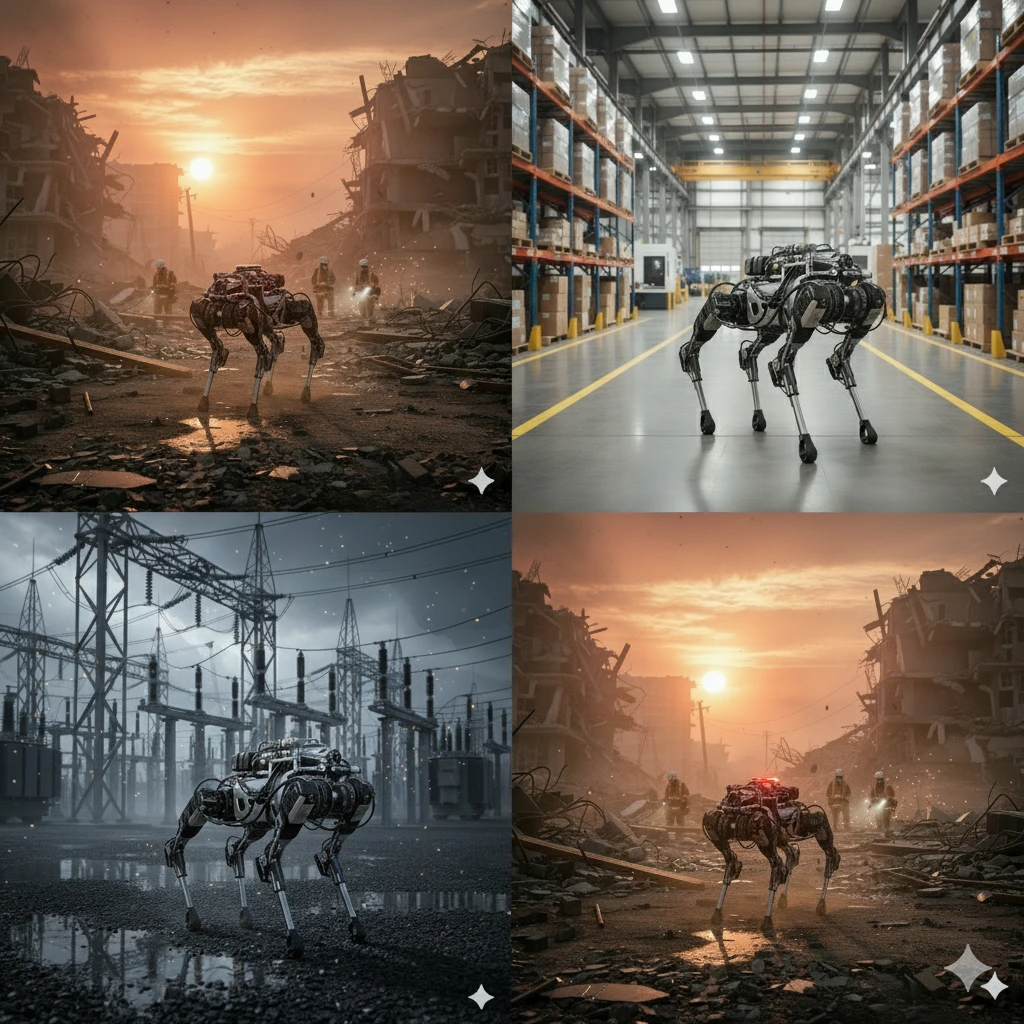
Lynx Quadruped Robot - USA-made
For those who cringe when buying cheap toys. For those who don't buckle under pressure - who keep showing up when others give in. For those who hate elitist pricing and sales pitches - real tools for real work. Want a robot that dances, click exit now, but if you need a robot that goes everywhere, keep scrolling here. The Lynx is a quadruped robot built different.
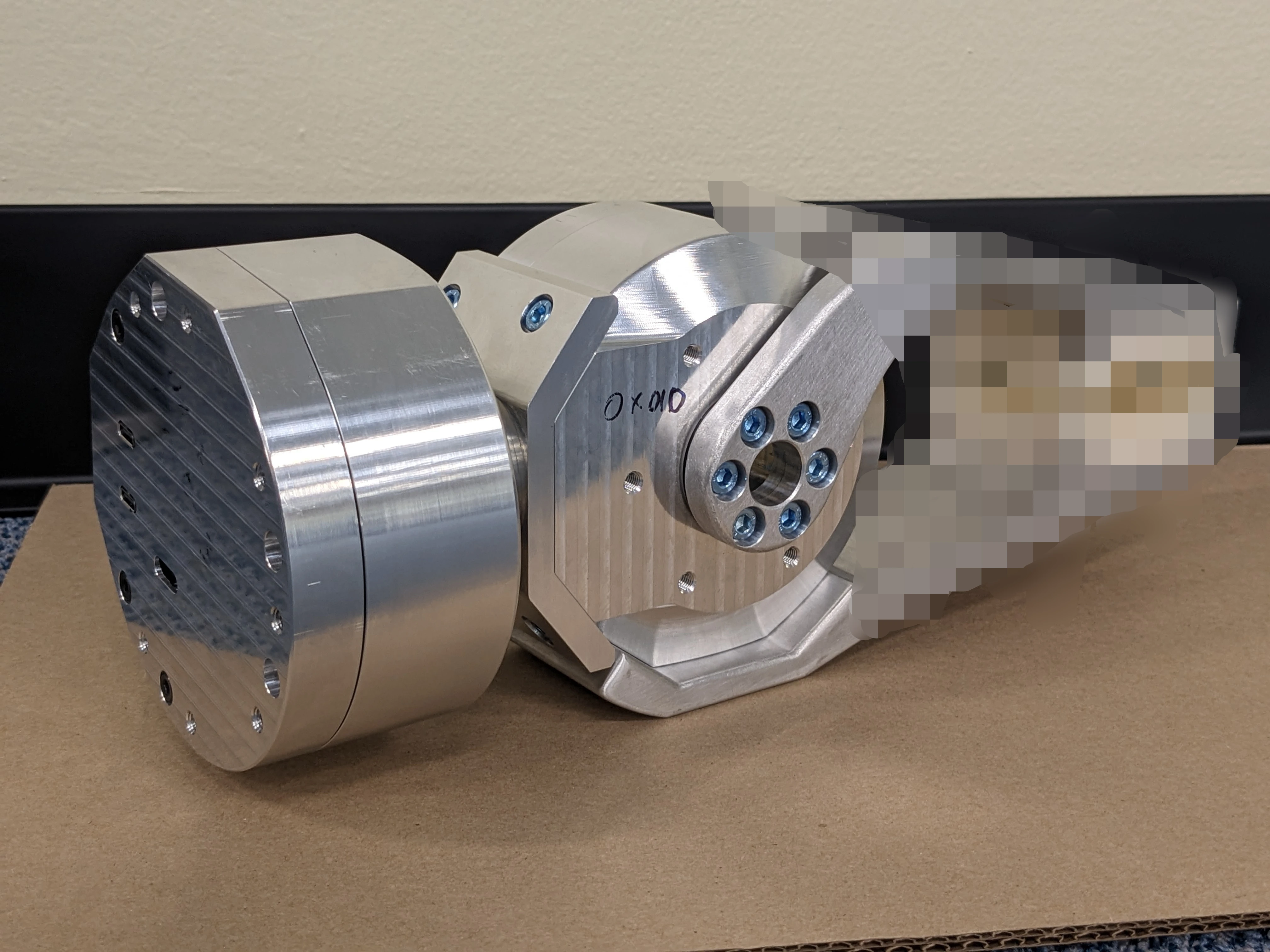
Lynx is a quadruped leg development platform—twelve QDD actuators, CM5 compute, and 48 V power. Optional cameras, controllers, and payloads are configured in the quote tool; specs below match our current quote builder.
Key Features
Leg platform
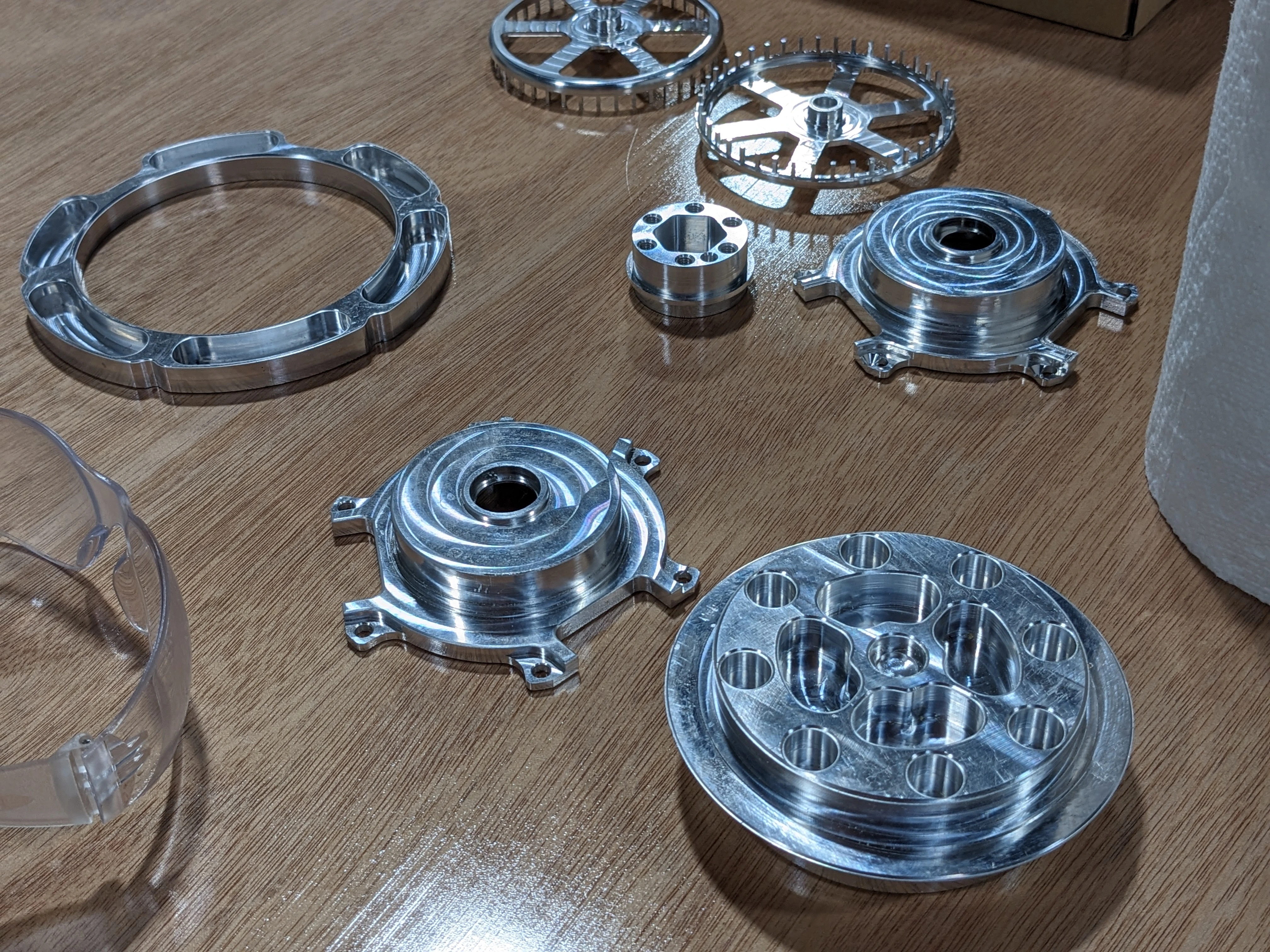
| Leg actuators | 12 high-torque QDD modules (3 per leg) |
| Joint drive | Direct-drive (no external gearbox) |
| Peak / rated torque (per module) | 120 N·m / 40 N·m |
| Max / rated speed (per module) | 200 rpm / 167 rpm |
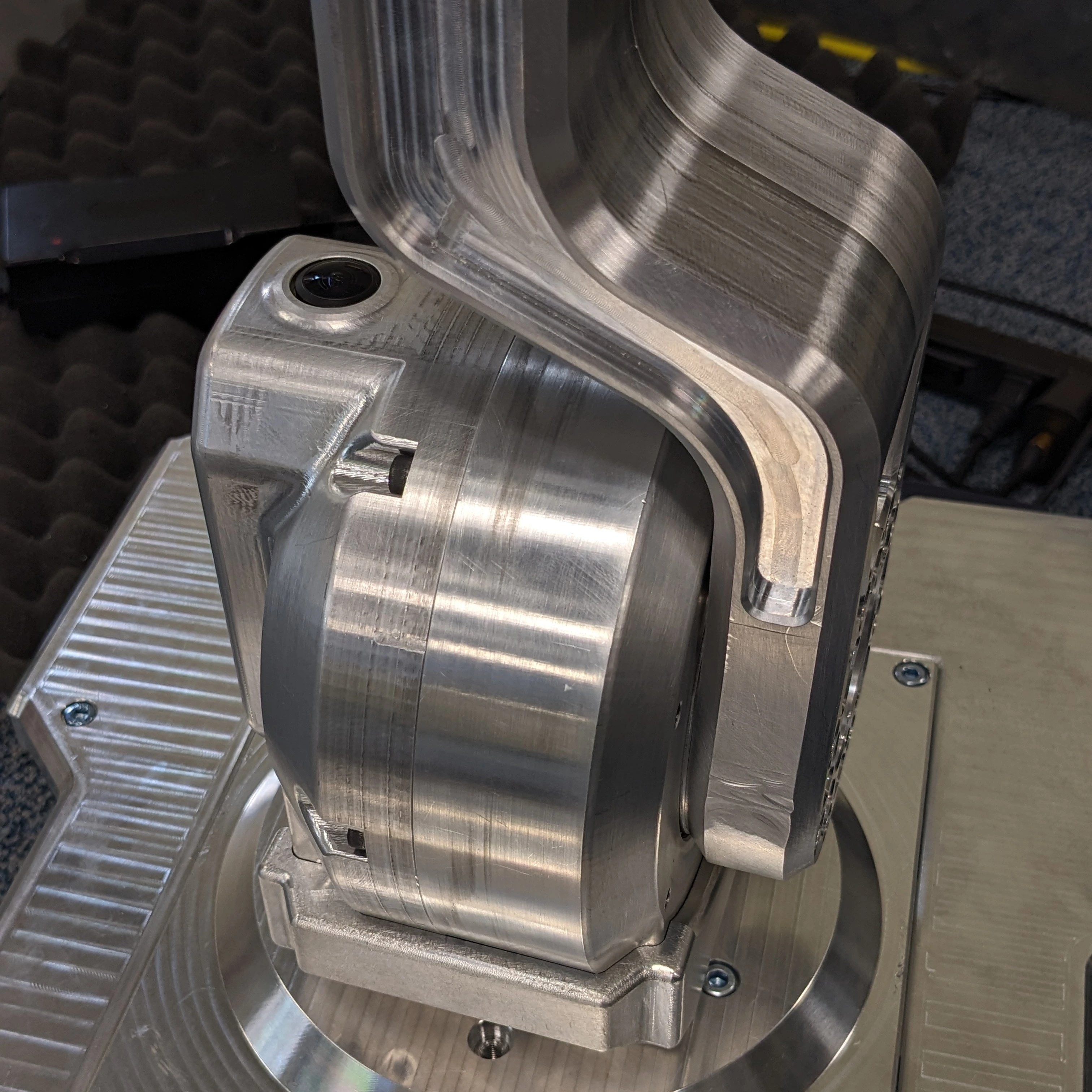
| Structure (Lynx) | Machined aluminum |
| Structure (Lynx Lite) | Sheet metal, exposed harnessing |
| Origin | Made in the USA; some imported components, including motors. NDAA-compliant. |
| Repairability | Easily field repairable |
Power
| Battery | 48 V nominal lithium system |
| Charging | Standard 120 V outlet |
Electronics
| Compute | Raspberry Pi CM5 |
| Networking | Ethernet, Wi-Fi, Bluetooth |
| Field bus | CAN 1 Mbps |
| Encoders | Dual 14-bit per actuator |
| Typical package | Leg assembly, CM5, 48 V battery, CAN harness, software bring-up support |
Drive Camera (optional)
On configured field packages, a fixed front drive camera provides a wide view ahead—useful for teleoperation and logging. Not included on every Lynx or Lynx Lite build.
Drive Camera
| Angle | Fixed front camera |
| Feed | View the camera feed on the controller |
Goat Traction (feet)
Special-engineered foot pads help the robot climb over obstacles and stairs, maneuver tight spaces, and infinitely customizeable
Goat Traction (feet)
| Climb | Ascend stairs rubber-like foot pads |
| System | Special engineered to have proper friction force |
| Turning | Tight turning radius |
| Surfaces | Maneuvers typical commercial and residential flooring types, along with rough terrain |
| Replacements | Easy-replace foot pads |
Control Range (optional)
Wireless range depends on radio package and environment. Some Lynx integrations also act as a range extender for other SuperDroid tactical units.
Control Range
| Line Of Sight | Up to 1,100 feet (wireless) |
| Through 2 Brick Walls | Up to 385 feet (wireless) |
Range Extension
| Other Units | Extend the range of SuperDroid tactical robot units |
Operator Control Unit (optional)
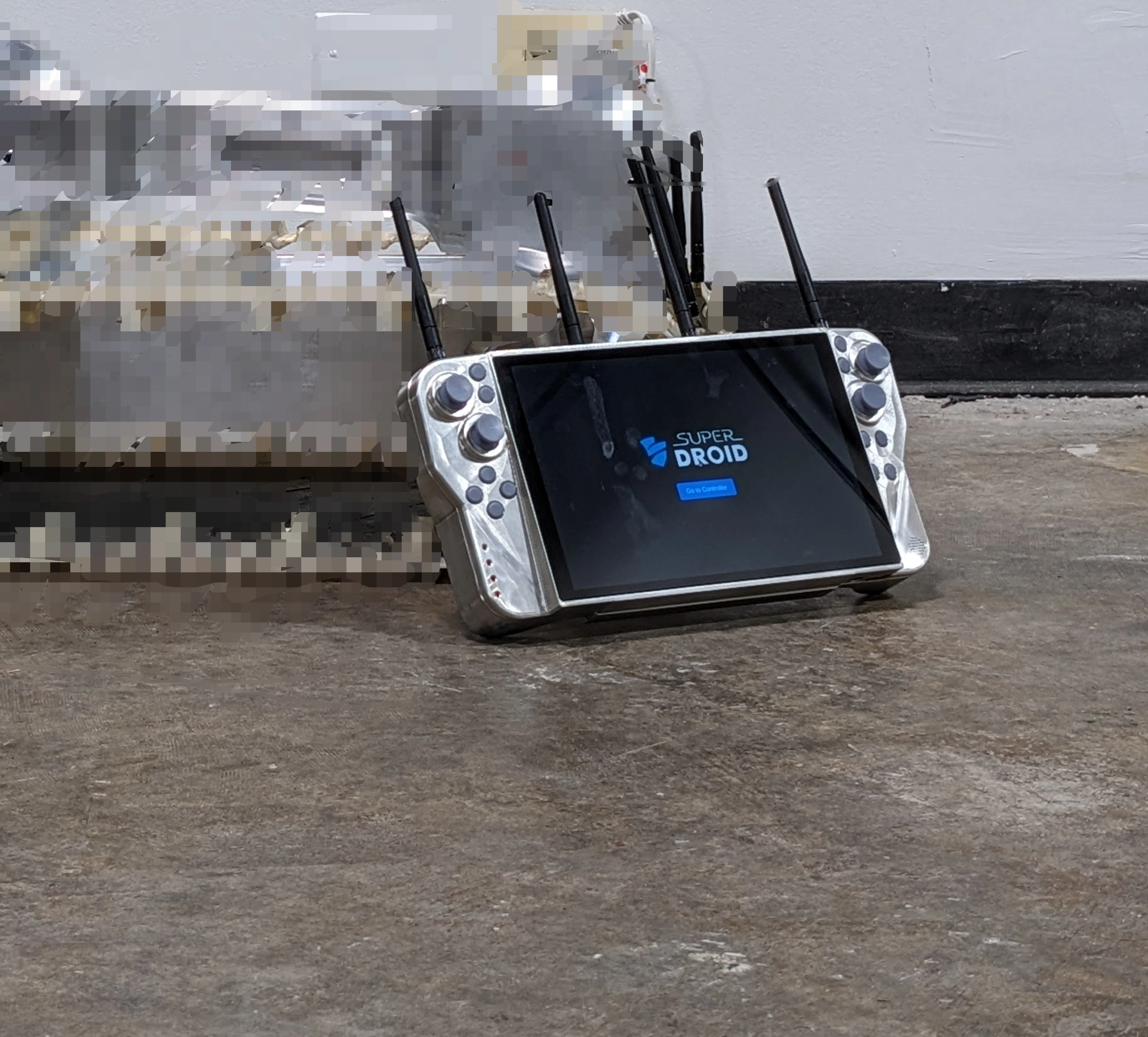
When ordered with a handheld OCU package, operators get a lightweight aluminum controller with a 10-inch screen, recording options, and physical controls alongside touch input.
Operator Control Unit (OCU)
| Screen | 10-inch |
| Runtime | ~8 hours |
| Display | View camera feed |
| 2-Way Audio | Talk and listen from a distance |
| Video | Record video |
| Save | Take snapshots |
| Monitors | Connect external devices using USB, audio, HDMI, or ethernet |
| Weight | 3 ½ pounds |
| Length | 13 ¼ inches |
| Height | 6 ¼ inches |
| Depth | 2 ¼ inches |
| Controls | Real controls and touch screen controls |
| Comfort | Ergonomic design |
| Material | Aluminum for lightweight durability |
| Batteries | High-power 5,000 mAH |
| System | Smart battery protection with a 7-check system |
| Charging | Easy-charge with a standard 120V outlet |