Ever wonder how continuous tracks and tread work?
Tracks are used on tanks, remote controlled cars, and robots. They provide light surface pressure, constant contact on the ground, and a smoother drive on rough terrain by stretching across any peaks and valleys. They can even allow a robot to flip over or climb stairs.
At SuperDroid, we use tracks on many of our robot platforms, making our own tracks for years. In the process, we've learned a thing or two about how they work …and what happens when they don't.
But first, let's answer a few common questions.
Frequently Asked Questions
How Tracks Work
1. Basic track mechanics
Basic track systems are a simple rhythm: a drive motor with a wheel, an idler wheel, and a continuous piece of track that ties it all together. The wheels have teeth around the outside. The drive motor spins the teeth on the wheel. The teeth engage the track. The track engages the idler. And voila! A rotating track system.
Some systems use more than 1 drive motor, but keep in mind the torque won't be shared equally unless the teeth tolerances are pretty tight.
2. The tread pattern
Treads look awesome. The tread is the pattern on the outside of the track. But it isn't just for show – the pattern itself directly impacts performance. For example, whether it's a straight line across the track, a zig-zag, chevron, etc., will affect driving, turning, climbing, and maneuvering. Here are examples of some of the tread patterns we've used for our robots. They're all different in some way.
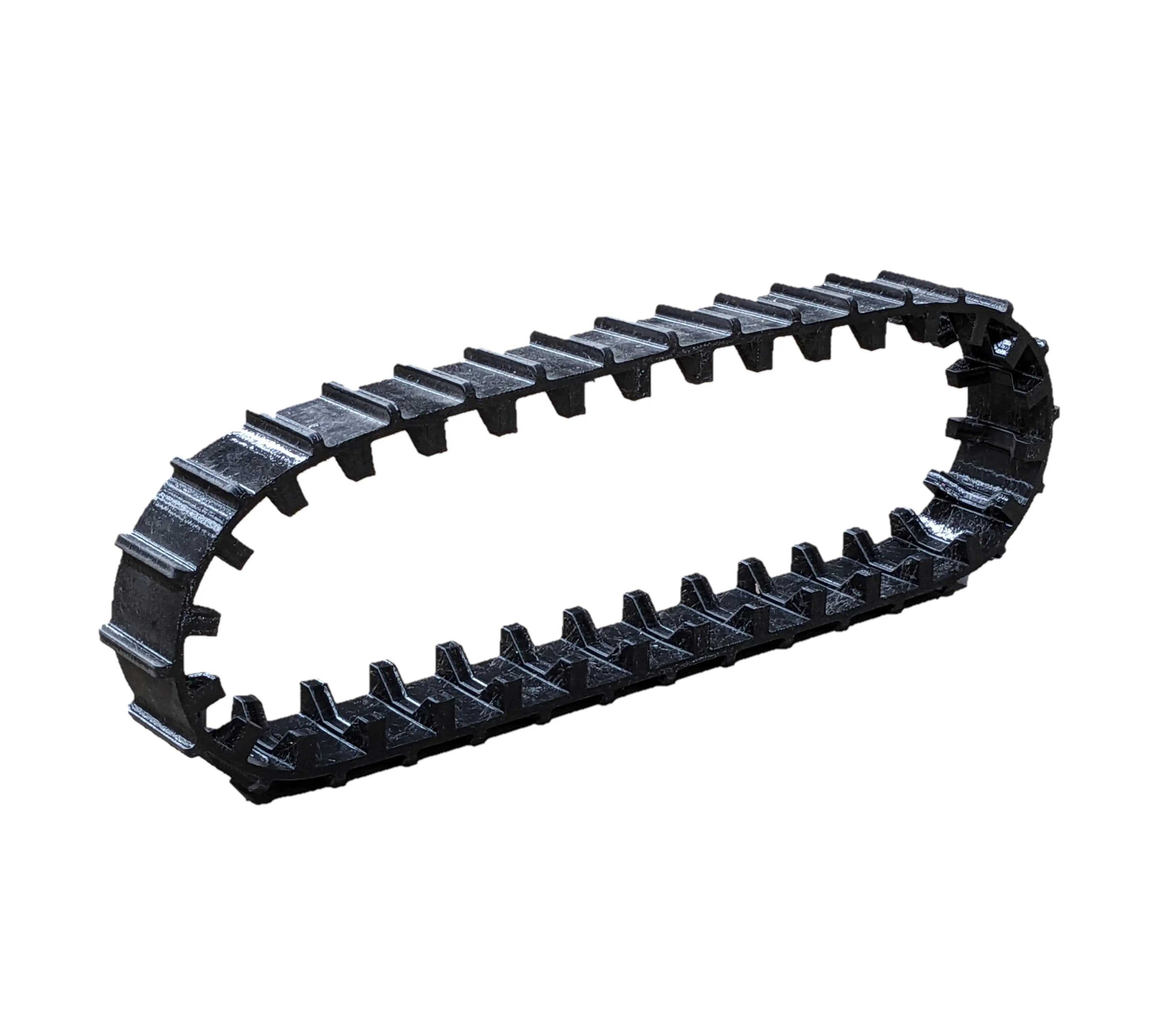

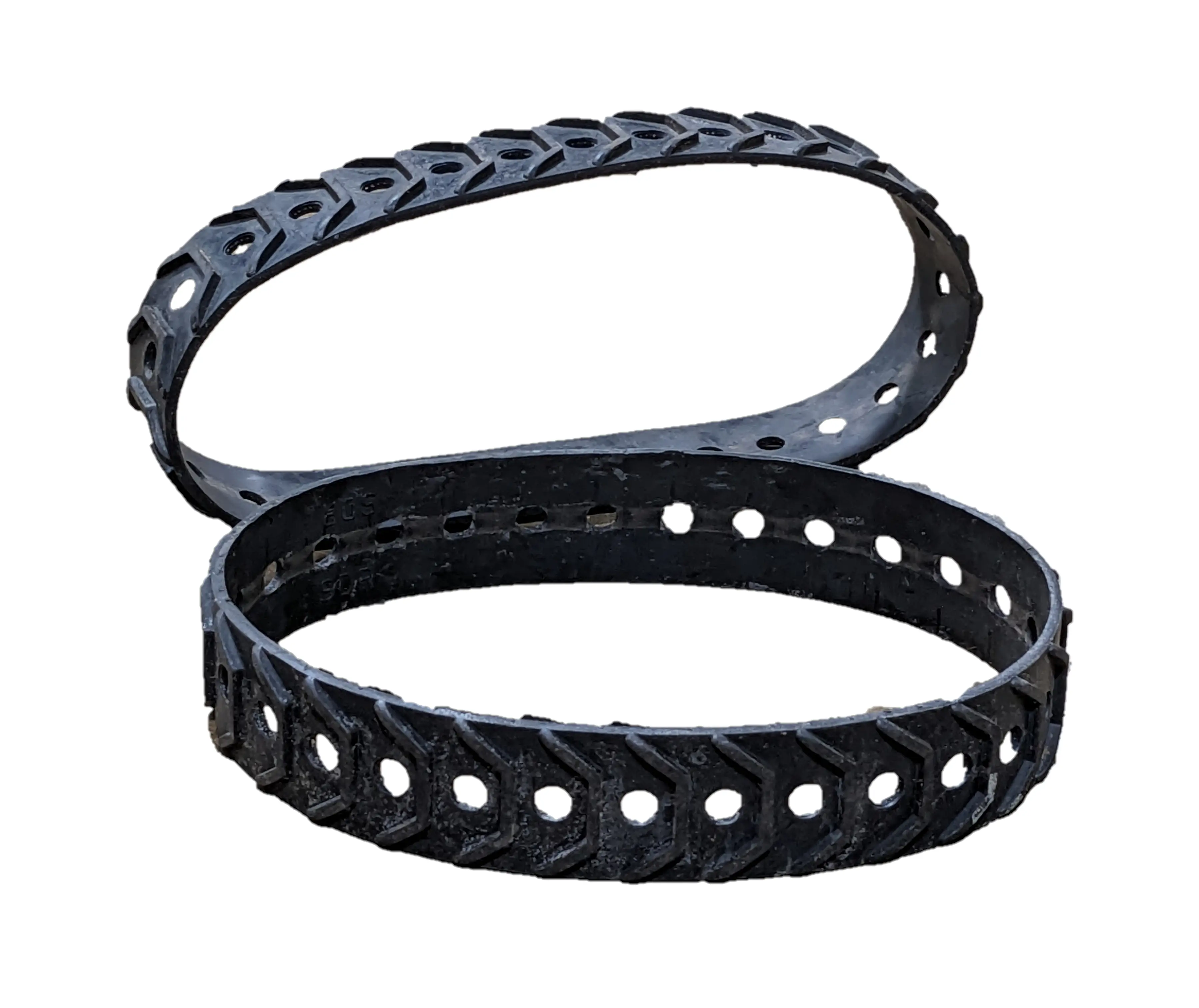
When designing the tread pattern, the biggest thing to consider is what coefficient of friction is needed. These questions may help determine that.
- Should the tracks skid as part of steering? How much?
- Should the track climb a specific obstacle? What is that geometry?
- Does the track need to provide a certain surface pressure on the surface it'll drive on, especially if it's a soft surface?
- What terrain will the robot be driving on?
3. The track material
The coefficient of friction is important above - it's also important in the material choice. In fact, it's where the rubber literally meets the road. Think about how and where the robot will be driven and ask if skid steering should be possible or not. Calculating the coefficient of friction can be tricky, depending on the robot's use case because it can seem like opposite things are needed in the same design.
Consider how long the track should last, like how many miles. This might be a multi-step calculation if it's easier to think of how many years it should last. Be sure you have a way to measure that now.
Know what temperature range the track will be operating in. Knowing whether it'll be used indoors or outdoors is important. (Don't forget to consider surface temperatures.)
If there's a tensioning system, consider how that will affect the material.
4. The drive system
When not skid steering, the teeth are what drives the track. When skid steering, there's often a feature on the track that prevents sideways movement off the wheel. This keeps the track in place and prevents it from sliding off. Depending on the loading of the track and other geometry, this can be handled in different ways.
Tracks are generally more economical than wheels because fewer motors are needed. However, they're more complex drive systems. If you're designing a custom track, the teeth might just be the biggest challenge. The geometry is similar to a timing belt and requires specialized math to get just right.
5. Manufacturing
Finding a manufacturer that's up for running a small batch of custom tracks can be hard and quite expensive, depending on the material and design. We manufacture our own tracks to have shorter lead times on orders and iterate quickly for new designs. It also allows us to make the tracks in the U.S. and use U.S.-sourced materials. We often go through several iterations for a new design.
6. Testing and validation
Nothing beats trying out a new track design in the real world. Create a small sample, set up a way to run it on the terrain it's expected to operate on and add the load it's expected to carry. Then see if it overcomes challenges like it should. Anything like a slippery surface, a difference in elevation, etc. can be considered a challenge for tracks. If it doesn't work like you had hoped, here's some things that may need to change: the tread pattern, the width of the track, or the placement of the teeth.
Summary
Tracks don't just roll - they're awesome! They spread weight across a larger area than wheels, giving a lighter surface pressure. On rough terrain and staircases, they keep the robot chassis more stable. With the length most tracks have, they smooth out peaks and valleys in the terrain. Tracks are great for traction, and for stability in rough terrains.
When building a DIY robot from scratch, remember that the robot's footwear matters as much as it's brainpower. Both wheeled and tracked systems have advantages to consider. When should each be used? It really comes down to matching the platform to the use case. Consider where will it be driven and what the terrain or surface material is. Also think about what ground clearance is needed and what sorts of turns will be needed. Some of our robots are tracked, some are wheeled (and some are legged).
If you have any questions, we're happy to provide feedback on track designs through our consulting services. We can also manufacture tracks in small batches, and even test a custom design in real-world settings. Contact us to learn more.