We build robots in West Chicago, Illinois. People still ask when we can put a plain Made in the USA label on a consumer robot—no asterisk, no fine print.
We looked into it. The metal, the wiring, the assembly? Those we can do here. The hard part is the tiny black chips that make the robot think, move, and sense the world.
Here is the twist most people miss: the answer is different for shoppers and for businesses. Consumer labels answer to the FTC. Business and government buying usually answers to trade and procurement rules. Under those trade rules, we can—and do—offer Made in the USA robots for businesses.
This is a high-level look at why the consumer label is still so hard, why business buyers play by a different book, and why we still say yet for everyday retail.
But first, a few common questions.
Frequently Asked Questions
The Big Picture
1. Two different Made in USA rules
This surprises a lot of people: a shopping-bag claim and a business purchase do not use the same rulebook.
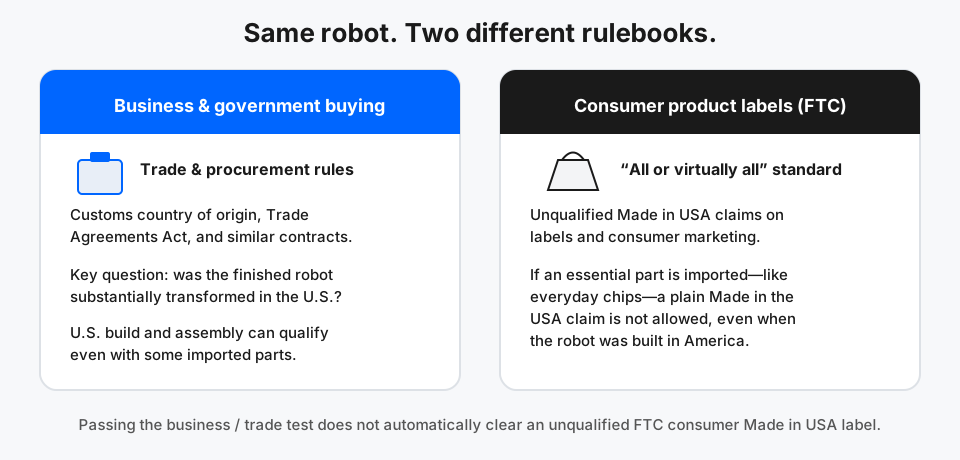
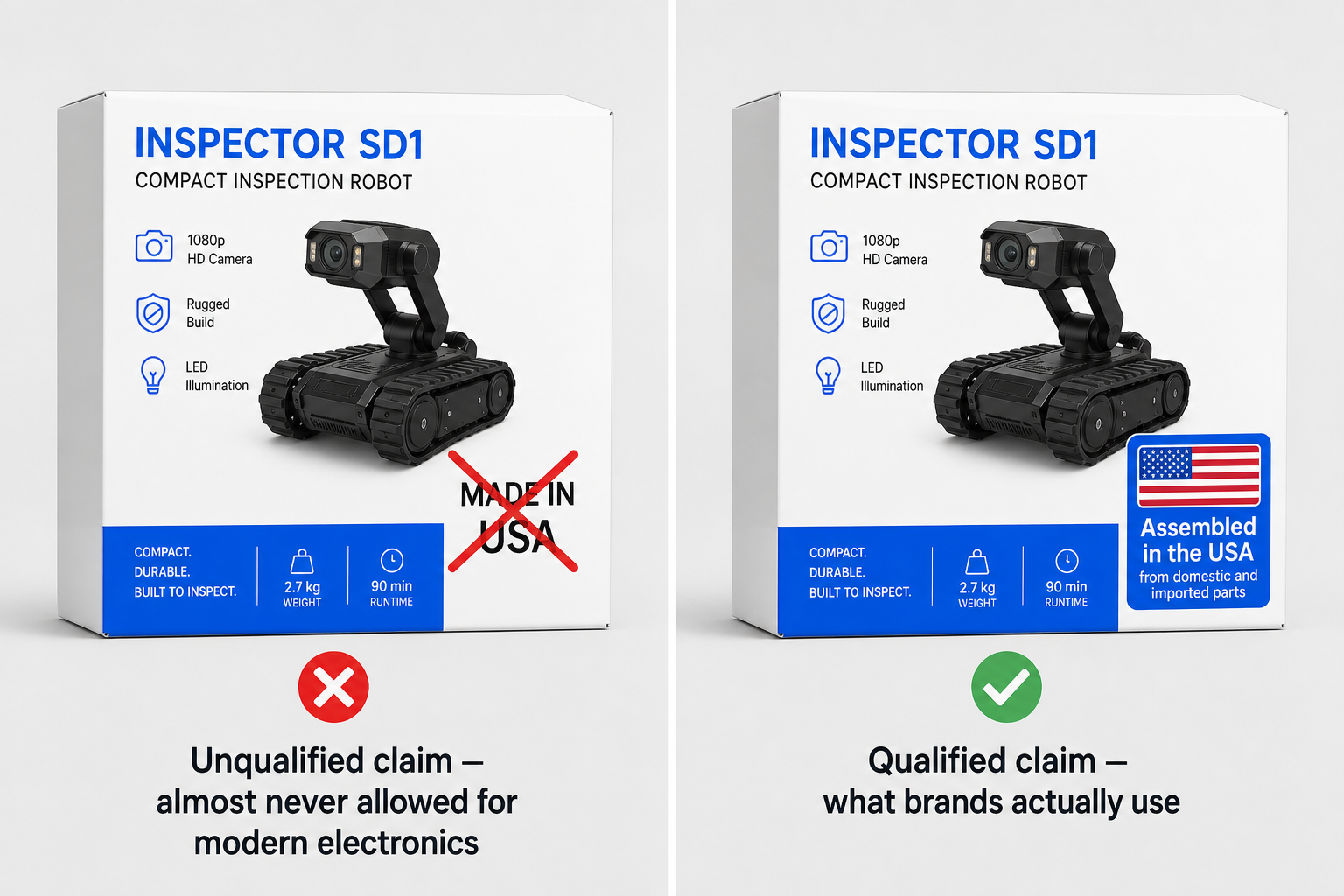
When you buy something as a consumer, the Federal Trade Commission polices unqualified Made in the USA claims. Its standard is strict: the product must be all or virtually all made in the United States. Final assembly here is not enough if essential parts—like everyday chips—are imported.
When a business or government agency buys a robot, the conversation usually shifts to trade and procurement rules. U.S. Customs looks at country of origin. Many federal and commercial contracts care about the Trade Agreements Act and related sourcing rules. Those frameworks ask a different question: where was the product substantially transformed into the finished article?
Substantial transformation is a trade concept. In plain English, it means the parts were turned into a new product with a new name, character, and use. Build and assemble a robot in the United States—machine the chassis, populate boards, wire it, test it, and turn a pile of components into a working platform—and that finished robot can often carry U.S. origin for business invoices, government procurement, and similar B2B paperwork even when some components were imported.
That is not the same as an FTC green light for a bare Made in the USA sticker on a consumer retail box. Passing the trade test does not automatically clear the consumer labeling test. They are related ideas with different gates.
2. Why businesses can still buy Made in USA robots
This is the big point.
If you are a company, integrator, facility manager, or government buyer, you are usually not shopping under the FTC’s consumer-label rulebook. You are shopping under trade and contract requirements: country of origin, domestic manufacture, TAA compliance, and whatever your purchasing department or contracting officer needs documented.
Under those rules, a robot designed, fabricated, assembled, and tested in the United States can be sold as a Made in the USA product for business use—even when some electronic components came through the global supply chain. The finished article was made here. That is what many B2B and government buyers are actually measuring.
We build robots that way in West Chicago. And yes: we offer Made in the USA robots for businesses. If your project needs domestic origin for procurement, resale into industrial channels, or internal sourcing policy, talk to us. That is a path we support today.
What we will not do is pretend the same robot clears an unqualified Made in the USA claim on a consumer retail label when everyday chips inside it are still packaged overseas. Different customer. Different rulebook. Different honest answer.
3. Packaging sets the country on the bag
Here is the part most people never see—and the reason the consumer path stays blocked.
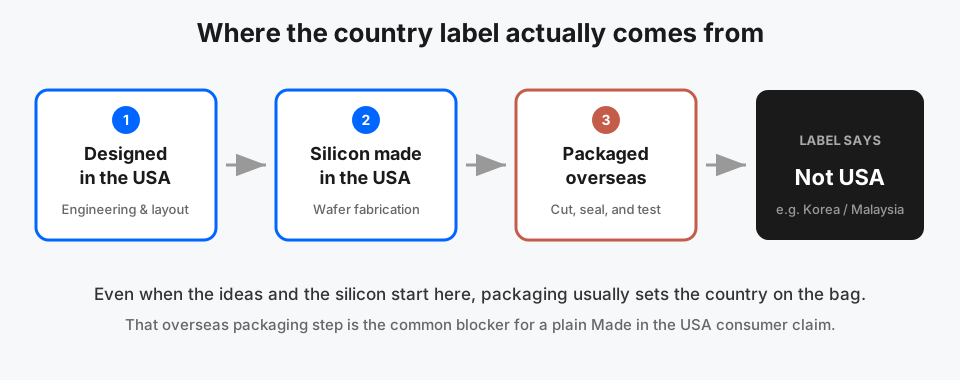
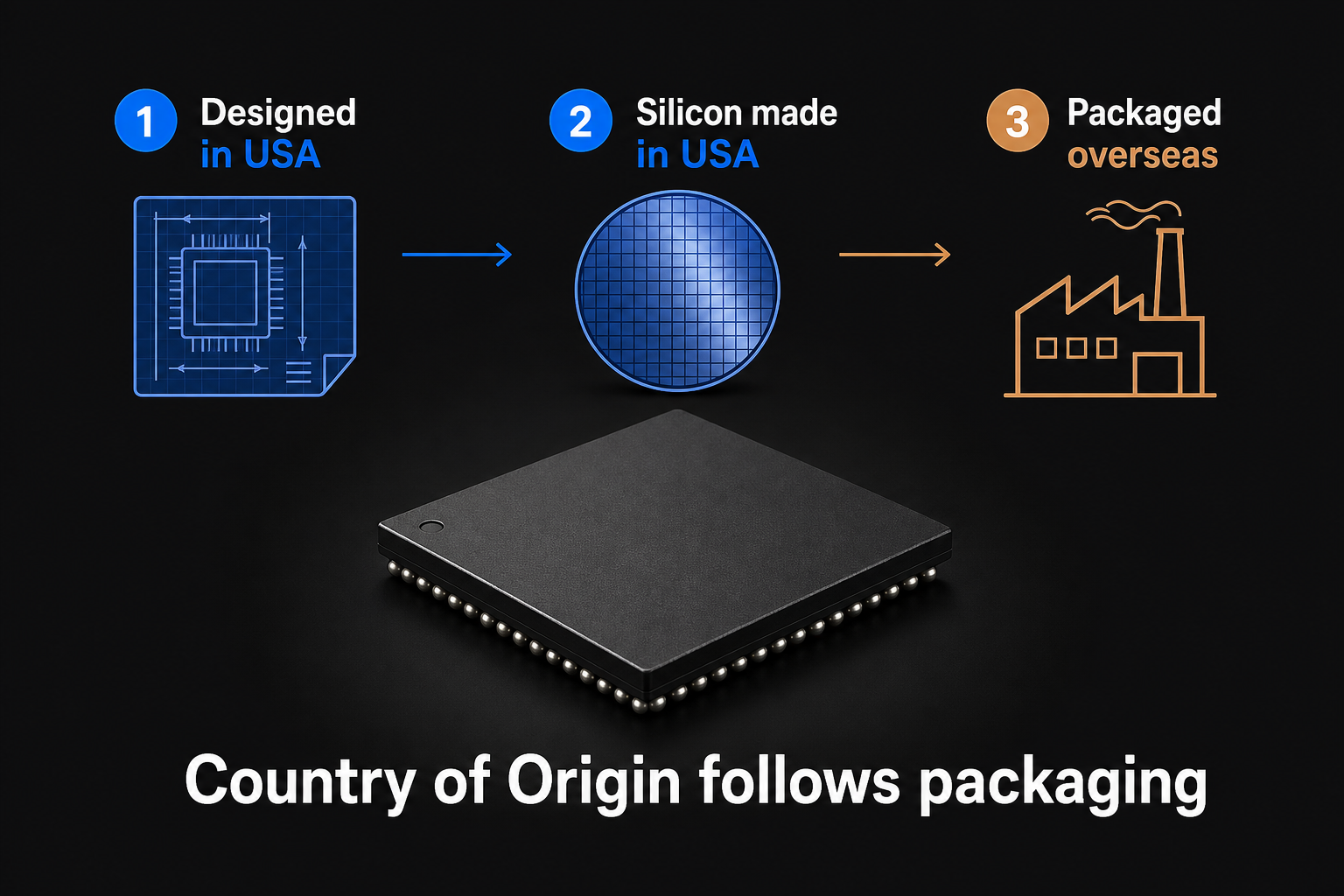
A chip can be designed in America. The silicon wafer can even be made in America. Then it usually gets shipped overseas to be cut up, sealed in black plastic, and tested. That finishing step is called packaging.
And packaging is usually what decides the country listed on the bag of that individual chip.
That is true for fancy camera brains. It is also true for everyday microcontrollers—the small chips that run motors, read sensors, and keep a robot moving. If you buy the normal consumer versions, they are hard to find with a United States country of origin.
For a finished robot sold to a business under trade rules, those imported chips can still be transformed into a U.S.-origin product through U.S. manufacturing. For an unqualified FTC consumer claim, those same chips are often fatal—because they are essential.
4. The U.S. chips that exist break the consumer budget
Yes, chips packaged in the USA do exist. They are mostly made for military, aerospace, and other high-reliability uses.
They also cost a fortune compared with everyday parts. A common microcontroller that might cost about $5 to $15 in its normal form can jump into the $150 to $300+ range on the specialty U.S.-packaged path—often 10 to 60 times more, and sometimes worse depending on the part.
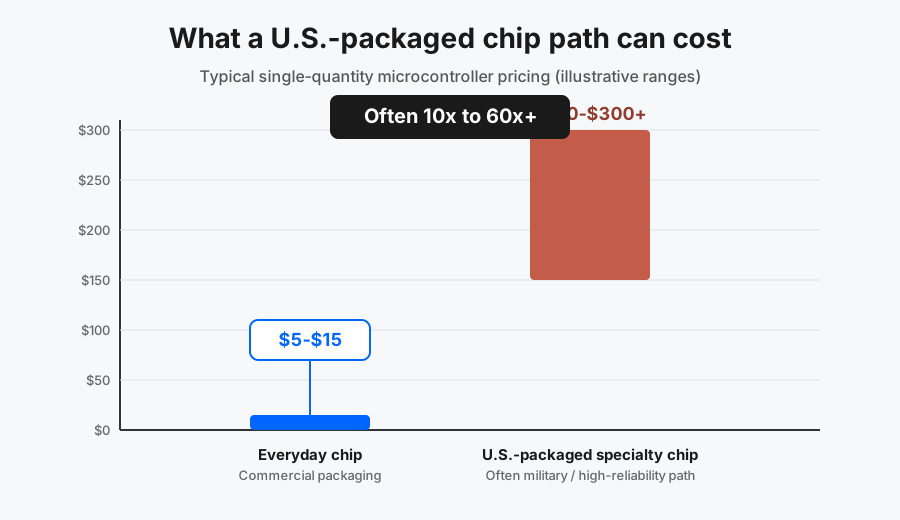
On one chip, that hurts. On a whole robot full of chips, it turns a consumer product into something that no longer looks like a consumer product.
So for consumer-facing products, the choice today looks like this:
- Use everyday chips and tell the truth with a qualified claim like Assembled in the USA
- Or pay specialty prices that blow up the budget to chase a plain Made in the USA consumer label
Business buyers who need Made in the USA under trade rules are in a different lane. They are buying a finished U.S.-built robot, not trying to clear every chip bag for a retail sticker.
5. Cost is not the only consumer test
Some people ask: if the imported chips are only a small slice of the total cost, can we ignore them on a consumer label?
Not for a plain Made in the USA claim. The FTC also asks whether the foreign part is essential. Their classic example is a watch built in America with an inexpensive imported movement inside. The movement may be cheap, but without it the watch cannot tell time—so Made in the USA is still not allowed.
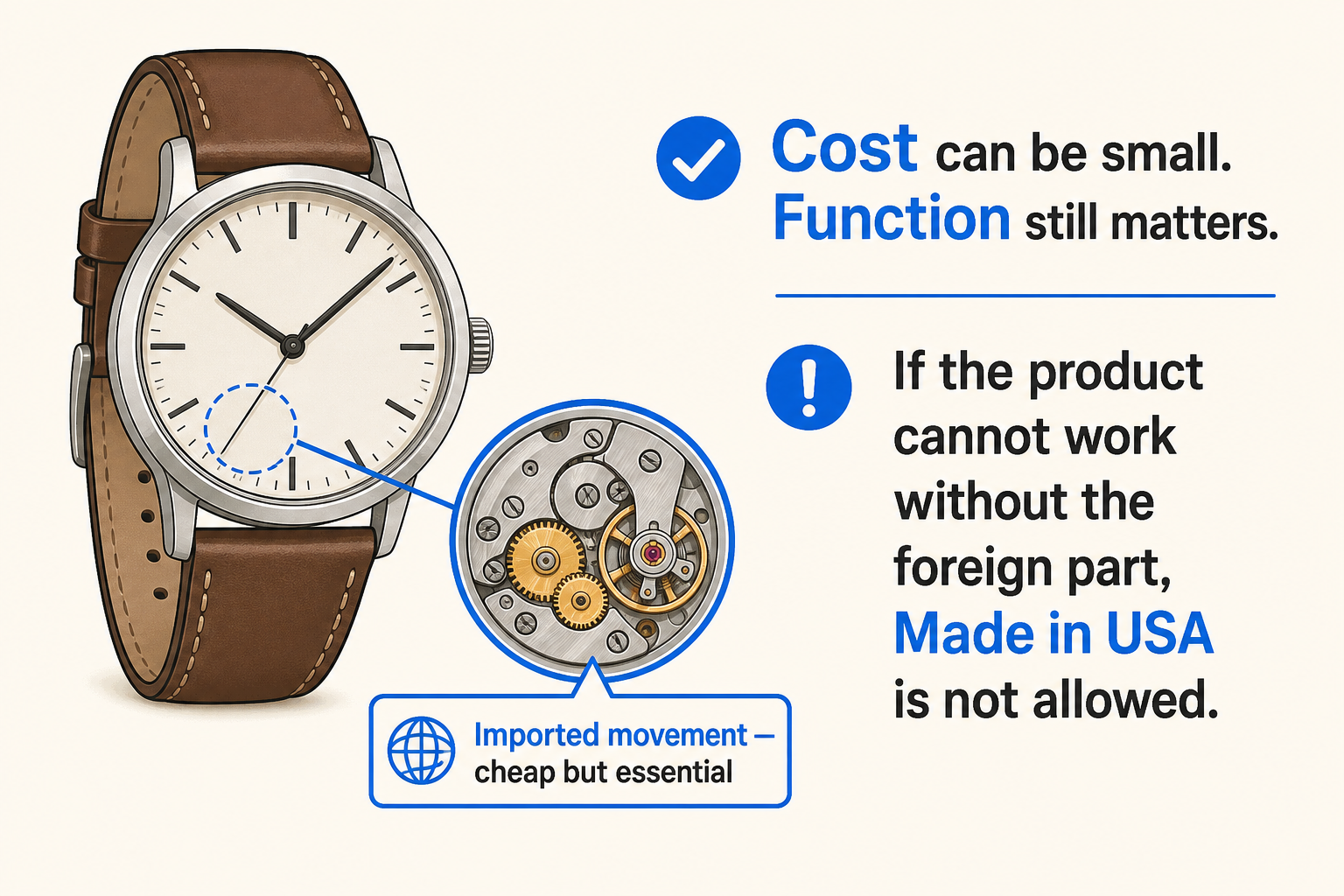
A robot's brain and senses work the same way for that consumer test. If the robot cannot run without those chips, they are not a rounding error on a retail label—even when the chassis, labor, and packaging happened in West Chicago.
Summary
We can design, machine, wire, and assemble robots in the United States. We already do.
For businesses and many government buyers, that U.S. build matters under trade and procurement rules. A finished robot substantially transformed here can be sold as Made in the USA for those customers. We offer Made in the USA robots for businesses.
For a consumer retail box, the FTC’s all-or-virtually-all standard is stricter. Everyday chips are almost always packaged overseas, and the U.S.-packaged alternatives cost many times more. That is why a plain Made in the USA consumer label is still so hard—and why honest consumer wording usually stays qualified.
The yet is still real for shoppers. More domestic packaging capacity for ordinary chips would change that math. Until then, the honest story is simple: businesses can buy Made in the USA robots from us today; consumer electronics still wait on the chip packaging gap.
Need a Made in the USA robot for your business, or have questions about how we build in West Chicago? Contact us. We are happy to talk through sourcing, documentation, and the right platform for your project.